


DIAMOND FUTURE: a tool for an informed choice of diamond journals
General framework
Although Open Access is arguably the dimension of Open Science that has advanced most systematically over the last decade, it remains a highly relevant and contentious issue. The scholarly publishing ecosystem has become increasingly diversified and commodified, comprising a wide array of models: from journals published by major commercial publishers to those managed by small or large research institutions, or directly by universities and learned societies. This landscape also includes non-commercial platforms like Redalyc and Scielo, among other diverse models. The proliferation of paid Open Access (Article Processing Charges, or APCs) has generated a significant global asymmetry: researchers with institutional agreements can publish their work, while others are forced to cover these charges with personal funds. At the same time, institutions are investing millions in disseminating research that has already been publicly funded. The detrimental effects of these trends are well-documented in the literature, leading to growing awareness among public agencies and regional policy-makers who are now seeking to reverse this situation. In response, initiatives such as the DIAMAS project, The Diamond Hub, The Global Diamond Summits, Craft-OA, and the Almasi project have made substantial contributions to fostering quality, community-led journals through the establishment of Diamond publishing standards.
Despite these efforts, there remains a significant knowledge gap concerning existing Diamond journals, their indexation, management, and institutional frameworks. This is particularly true for Latin America, where thousands of these journals are published but remain underrepresented, a phenomenon also extensively studied in bibliometrics. Investigating these journals could provide valuable insights into how to foster the diamondisation of academic publishing and ensure its sustainability. Furthermore, it could highlight the visibility and circulation challenges that need to be addressed as a global problem. A more complex and scarcely addressed challenge is how to endow these Diamond journals with symbolic value, thereby incentivizing researchers to choose them for disseminating their findings within the current context of research assessment. This challenge is directly linked to the reform efforts promoted by organizations like COARA, DORA, and FOLEC, a widely desired but largely unachieved goal across most institutions.
The Diamond Future project is a collaborative effort between 2 universities from Argentina and the Berlin University Alliance, building upon the Cartography of Inclusive Open Science developed at the Research Center for the Circulation of Knowledge (CECIC; UNCuyo, Argentina) and the platform HERA, at the National University of La Plata. This project aims to bridge the gap between the Open Science movement and the evaluation reform by informing researchers about the complete landscape of Diamond journals at a global level. The Diamond Future project is designed to be complementary to the SEDOA in Germany by building a global registry and a platform capable of providing reports on indexed no fee, community-led journals worldwide. The initial phase of this project focuses on creating a conceptual framework and a list of sources for the website, along with a revision of the cartography of 17,855 journals empirically updated during Fernanda Beigel’s BUA fellowship in Berlin (April-July 2025).
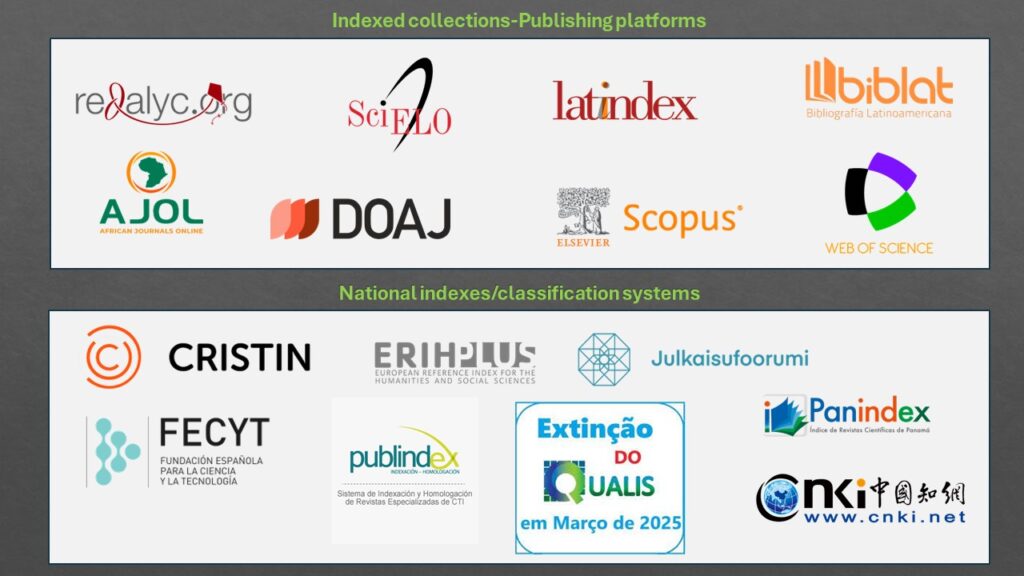
Once this architecture is achieved, a prototype of website Diamond Future will be created based on the Tool for Scholarly Resources Assessment (HERA), a web-based tool that aims to simplify, streamline, and support the process of determining the quality and impact of a scholarly resource. To do so, it quickly compiles information from different scholarly databases (mainly quality and impact indicators/metrics) and then displays it in an integrated and user-friendly manner. The simplification is driven by two factors: 1) given the multiplicity and diversity of existing scholarly databases, HERA selects based on expert criteria, allowing the end user to have a representative view of the resource at a low cost; and 2) operation requires nothing more than entering the resource identifier in a search field and clicking a button. The agility comes from the automatic information gathering process that HERA performs for a given resource, which relieves the user of the task of individually searching external sites.
General objective
- Foster the researchers’ choice of community-led diamond journals
Specific objectives
- Systematize a contextualized state of affairs on the existent definitions and standards for quality diamond journals.
- Build the conceptual and technical framework of the sources and input needed for a global registry of diamond journals in a website initially called Diamond Future
- Create a first prototype of the platform tool that can provide relevant information to researchers and evaluators on the diamond journals that meet quality standards
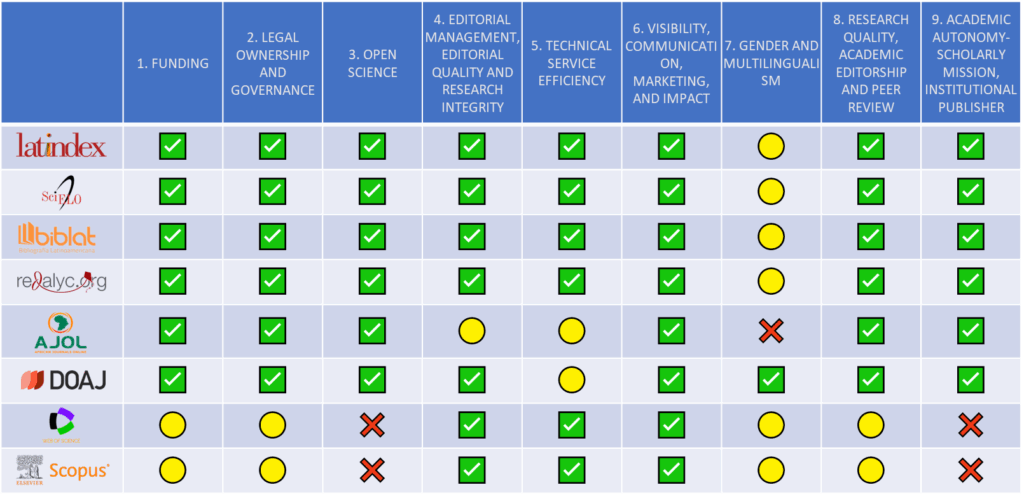
The envisioned collaboration with SEDOA and the Berlin Universities
The existing capacities and open infrastructures in Argentina and Germany can play a noticeable role in fulfilling some of the main proposals for an equitable open access included in the UNESCO of the Recommendation on Open Science. In both countries, there is a will to foster Open Science practices through national and institutional policies considering interculturalism and preserving multilingualism. In Argentina, there exists a national Law (26.899) since 2013 with a mandate to create Open Access Repositories in every academic institution in the country. The PI of this project, Dr. Beigel, is a Principal Researcher at CONICET and serves as a member of the Social Sciences and Humanities National Board in this agency. She was appointed as the coordinator of the National Committee for Open Science created by the Science and Technology Ministry in 2022. At the regional level, Beigel is a senior advisor for the Latin American Forum for Academic Assessment (FOLEC), an organization created by CLACSO to provide space for research and advocacy for the transformation of academic evaluation in Latin America. She is also part of the Declaration on Research Assessment (DORA) Working Group on national initiatives. The Co-PI is the director of PREBI-SEDICI at La Plata National University (UNLP) and the director of CESGI Center at the Comisión de Investigaciones Científicas from Buenos Aires province (CICPBA), Gonzalo Villarreal, who coordinates the institutional repository of both UNLP and CIC, along with the journals portal of UNLP, and the open data repository.
This project can interact with the Berlin University Alliance through its four members – Freie Universität Berlin (FUB), Humboldt-Universität zu Berlin (HUB) Technische Universität Berlin (TUB), and Charité – Universitätsmedizin. All have adopted or revised Open Access policies and participate actively in the new national Diamond service SEDOA and Berlin UP. These libraries offer specific catalogs and infrastructure that can be very useful to create this tool in the framework of the BUA Objective 3 (Advancing Research Quality in Value). These research teams and services offer an ideal base for the construction of a global tool to help the researchers to open up to publish in diamond journals.
Promoting an equitable collaboration between the BUA and the Argentinian universities involved in this project can also be a concrete experience for tackling the colonial legacy of science, creating together a service for the international research community. Diamond Future could be a starting point for a consortium composed by the BUA universities, SEDOA, BERLIN UP, and the 3 institutions with which we are collaborating in Argentina: the CONICET, Universidad Nacional de La Plata and CECIC-Universidad Nacional de Cuyo.
“Our project Diamond Future attempts to focus on the researchers’ choices and beliefs, informing about quality diamond journals with proven academic anchorage and editorship. We attempt to provide information about indexation services that evaluate journals by quality in order to foster a change in research assessment and evaluative cultures. But also, we aim to give visibility to the complete landscape of the diamond journals at a global scale, beyond the limits imposed in the traditional databases by the availability of persistent identifiers.” (Beigel, 2025)