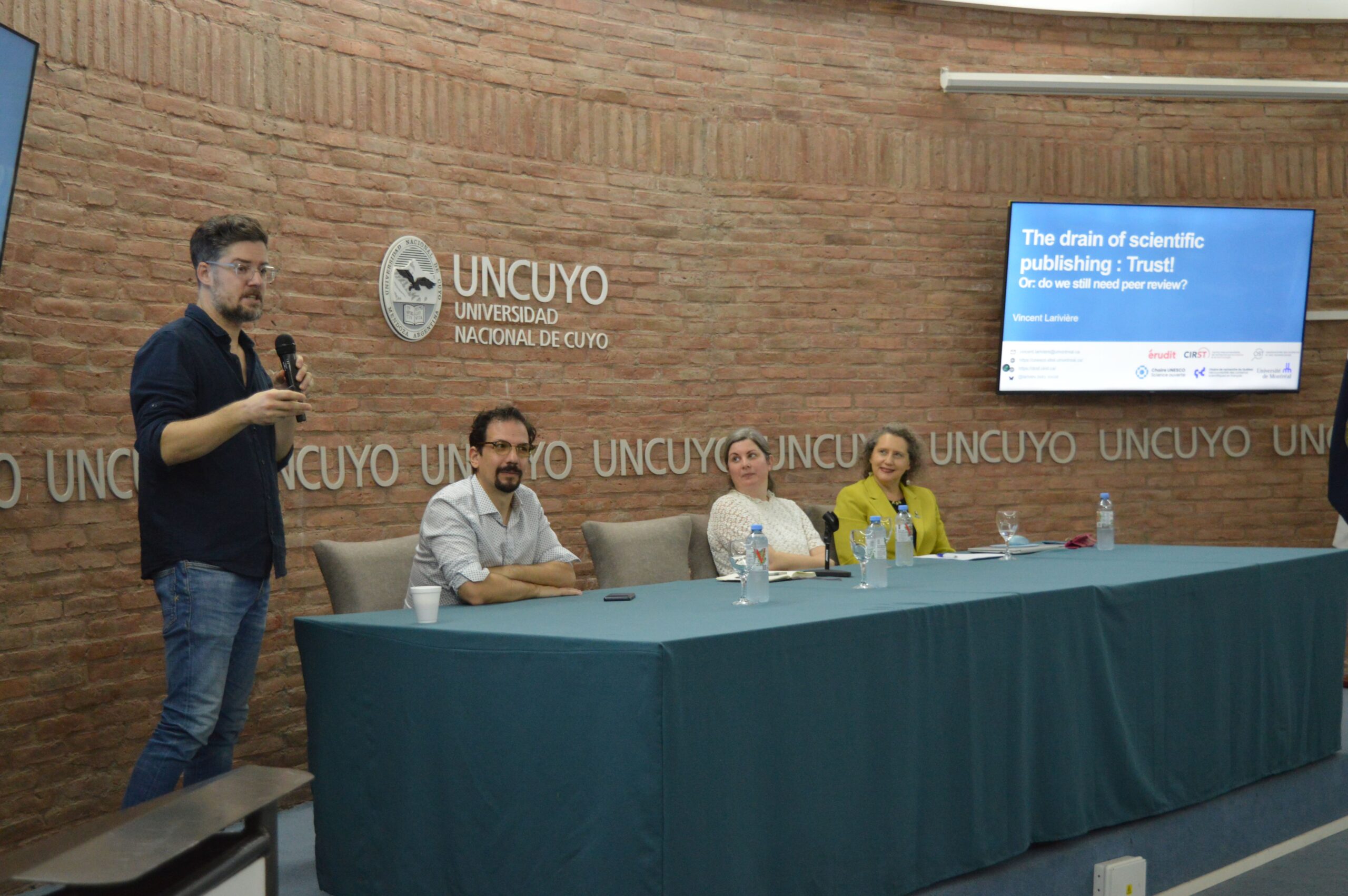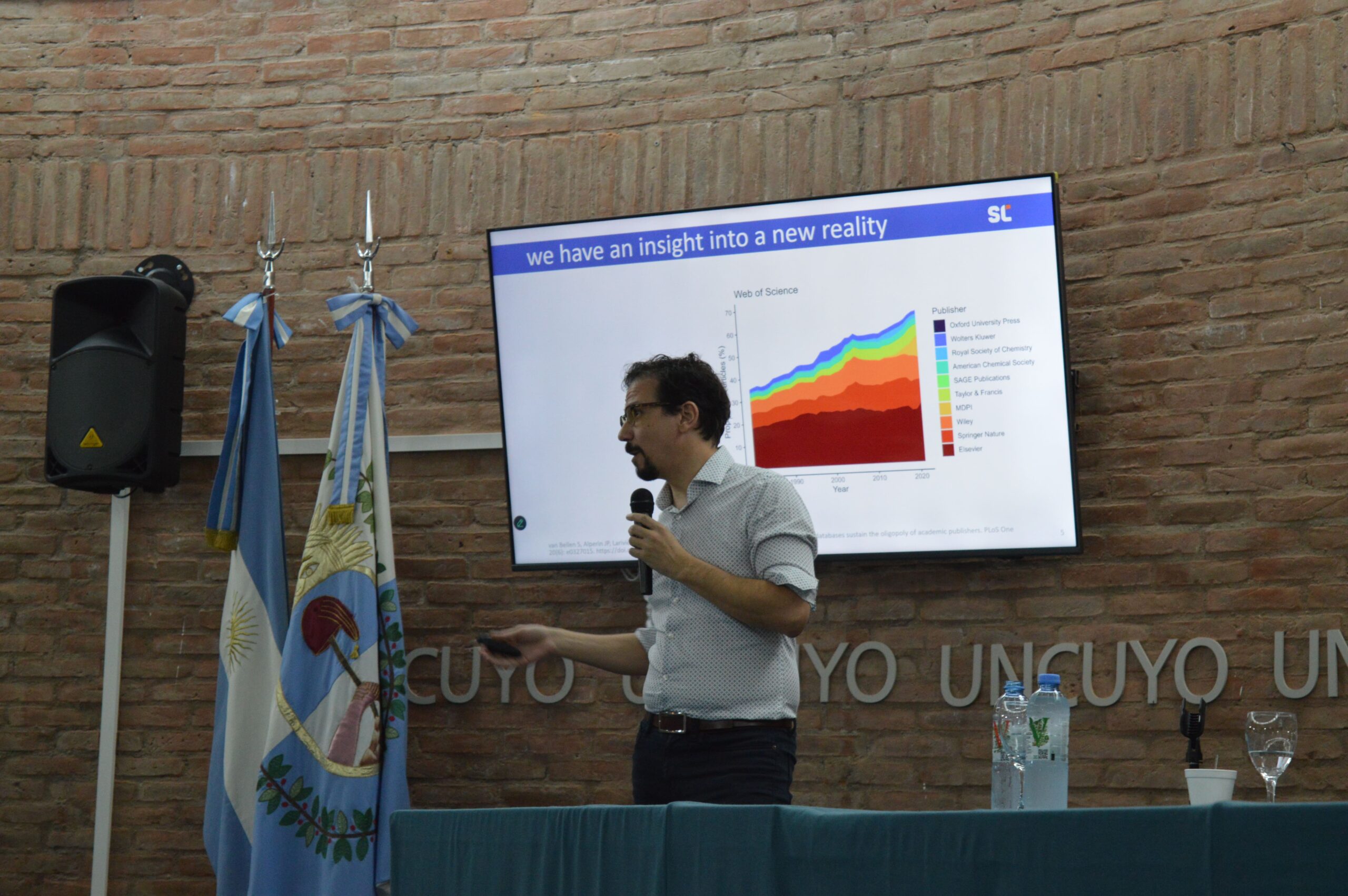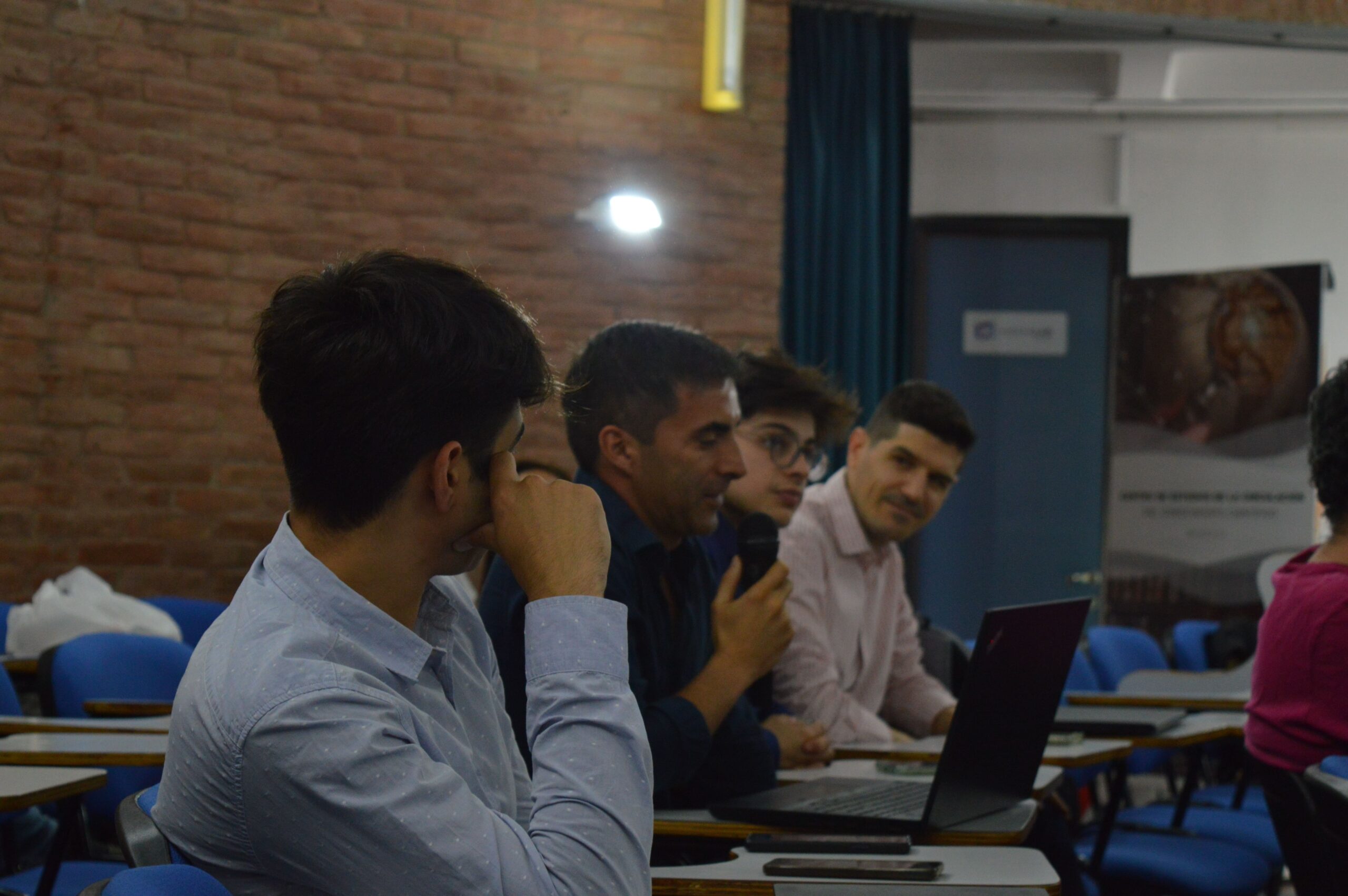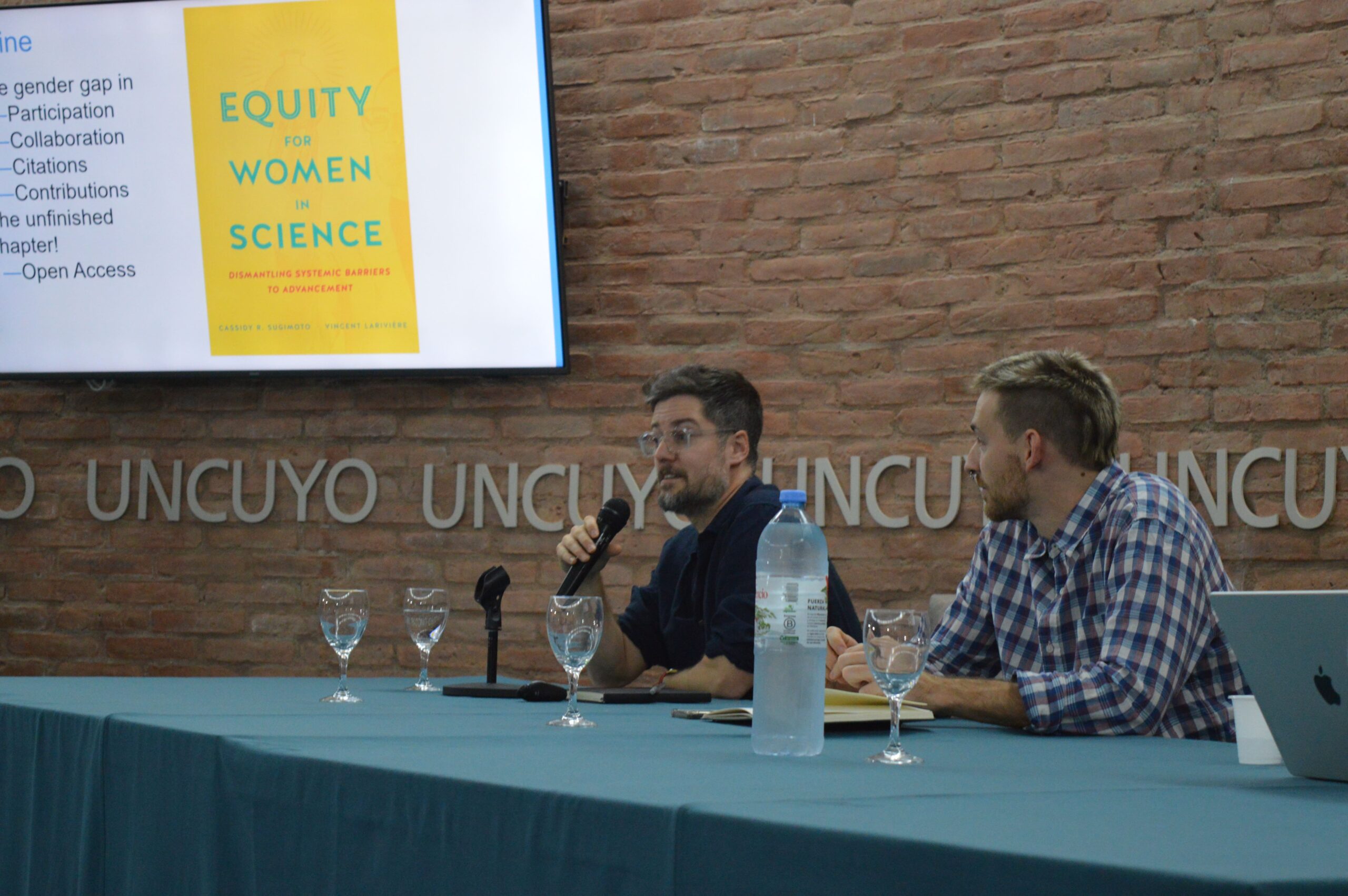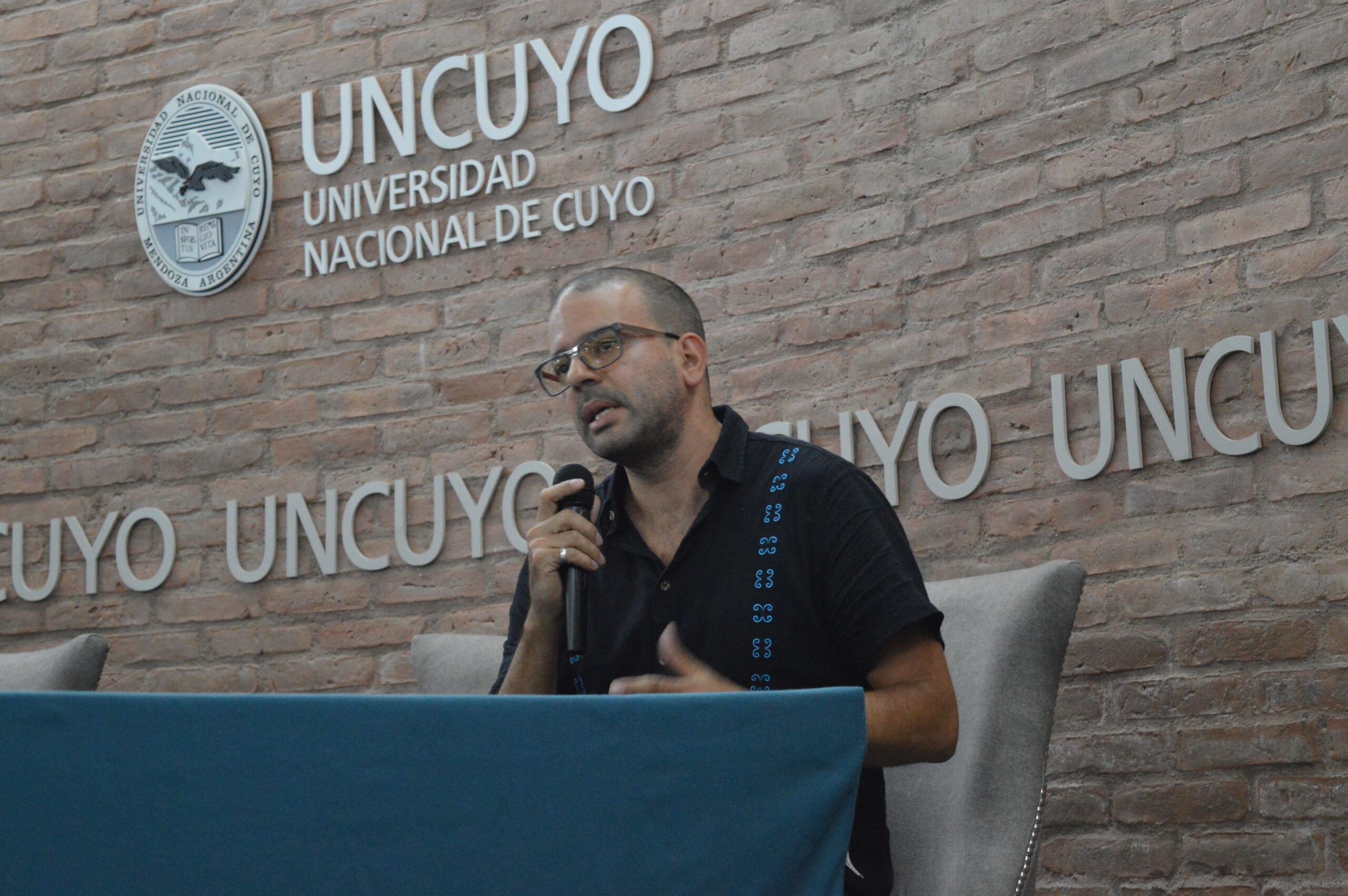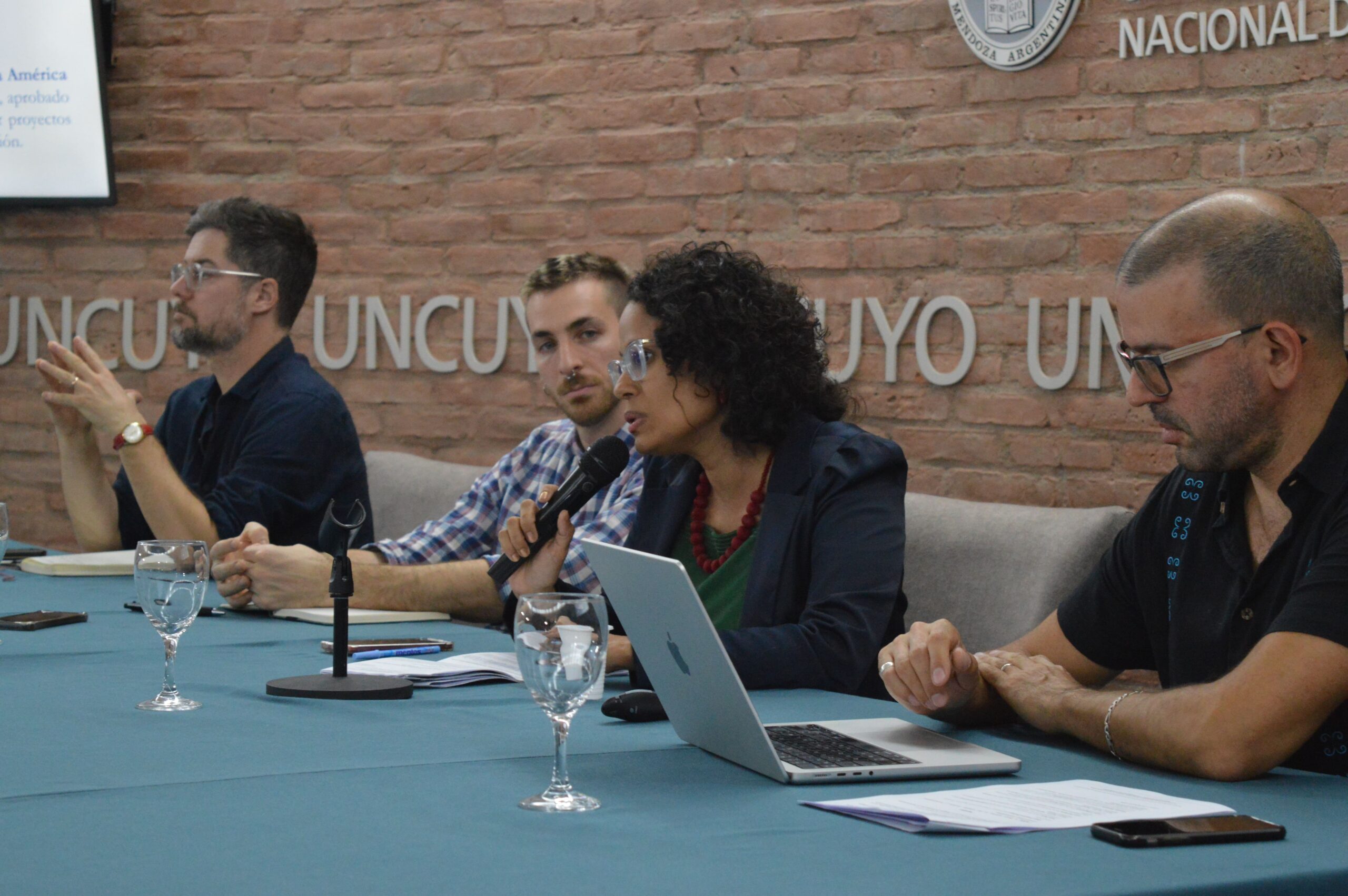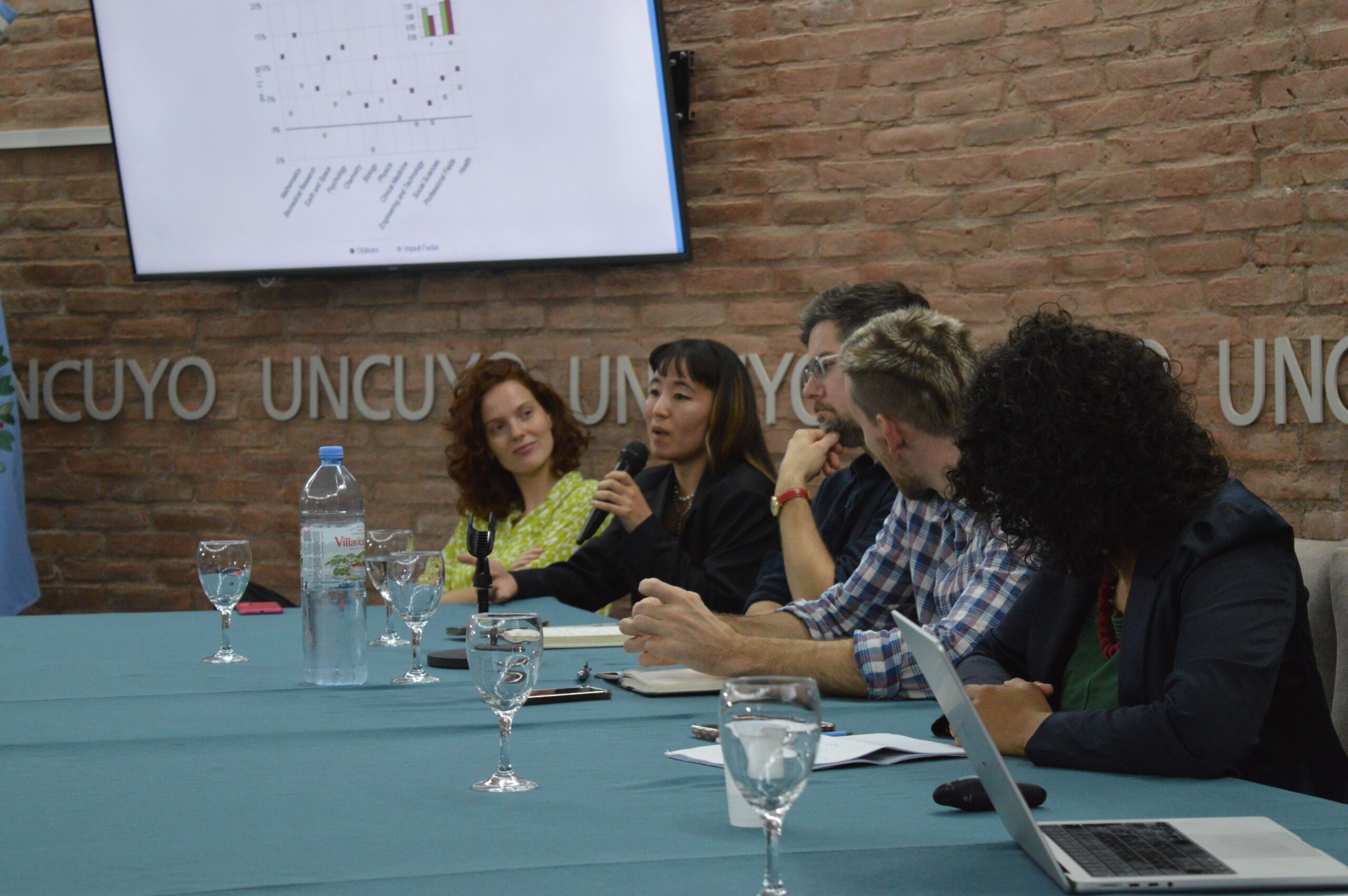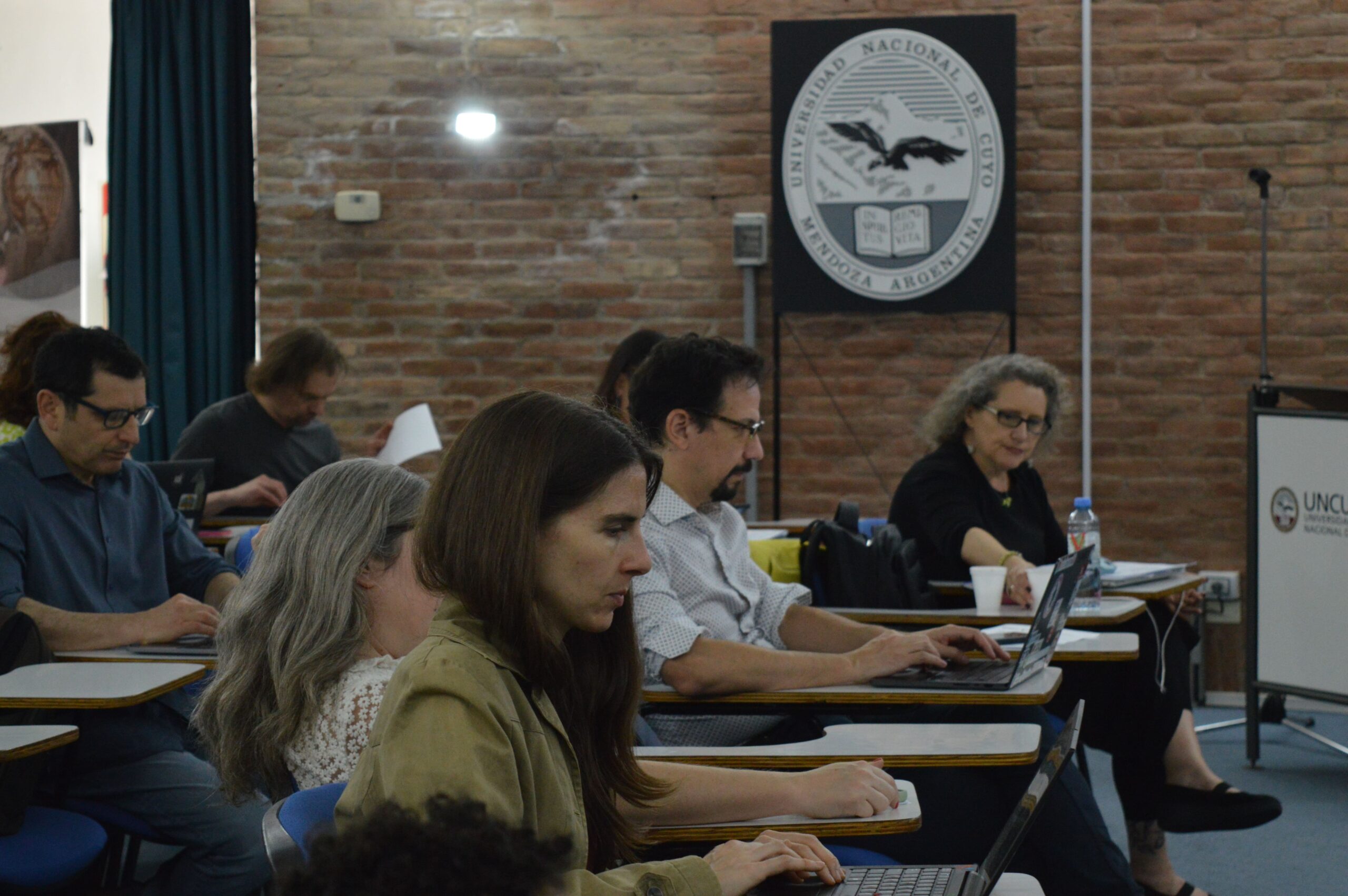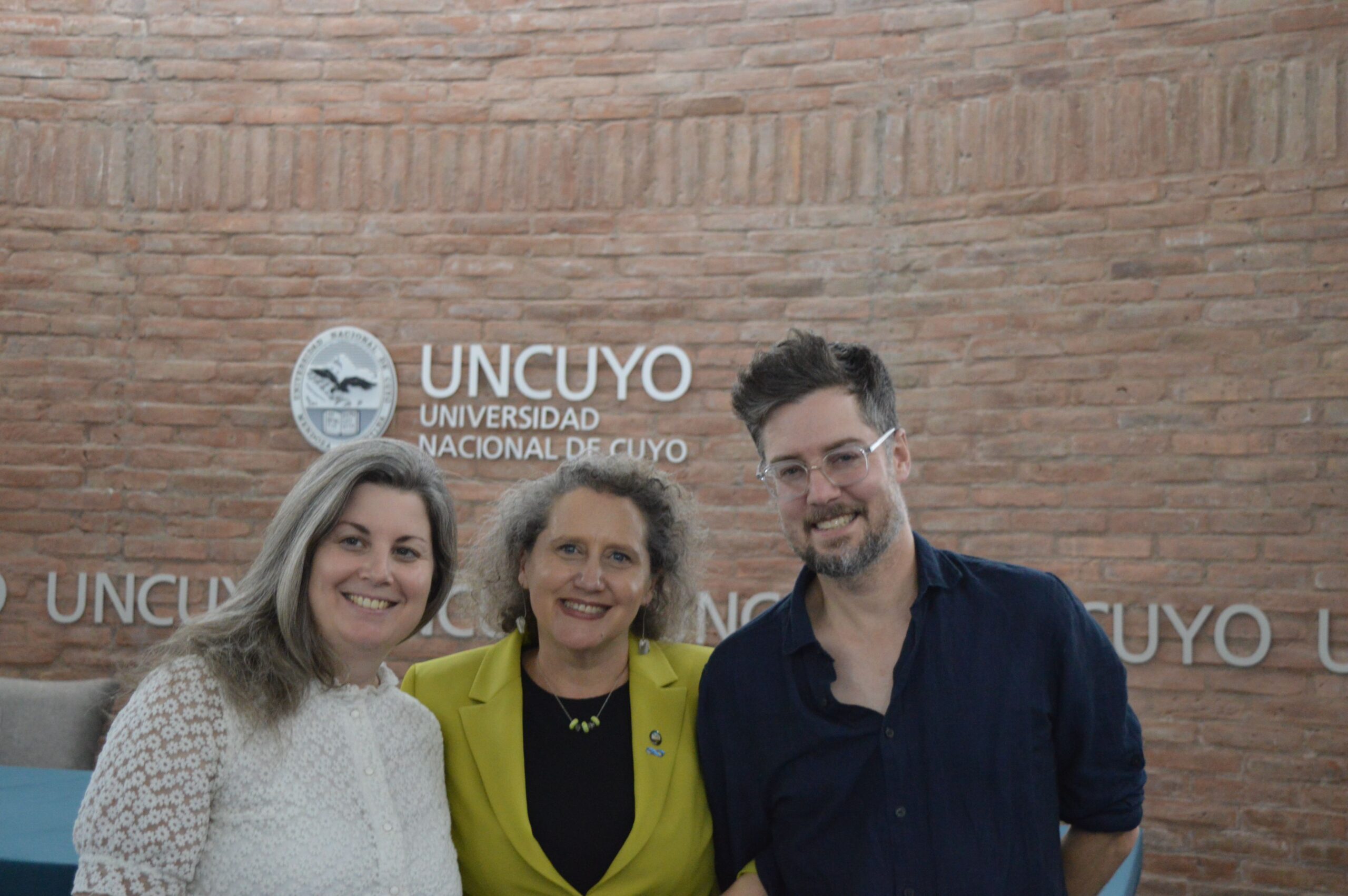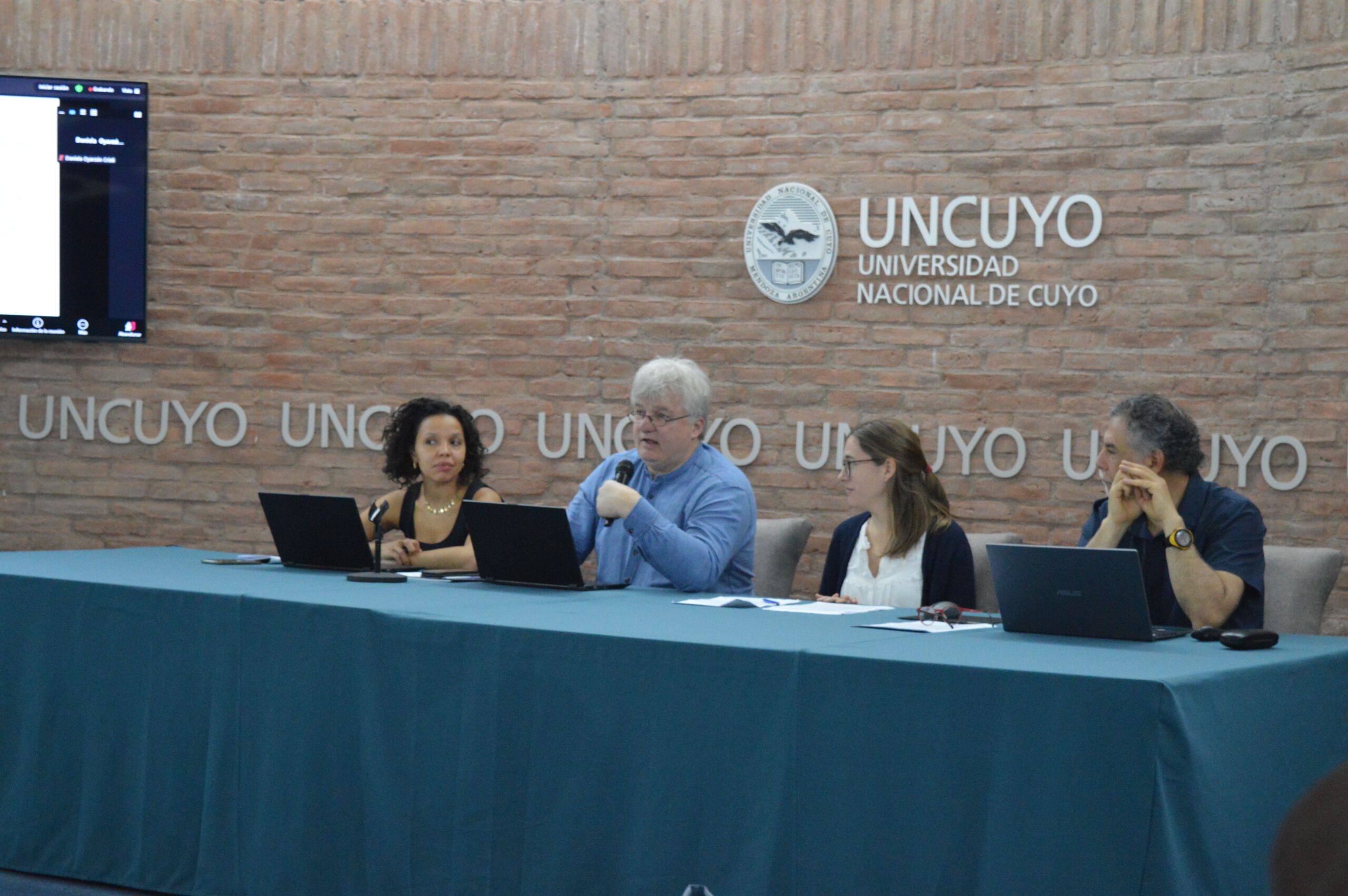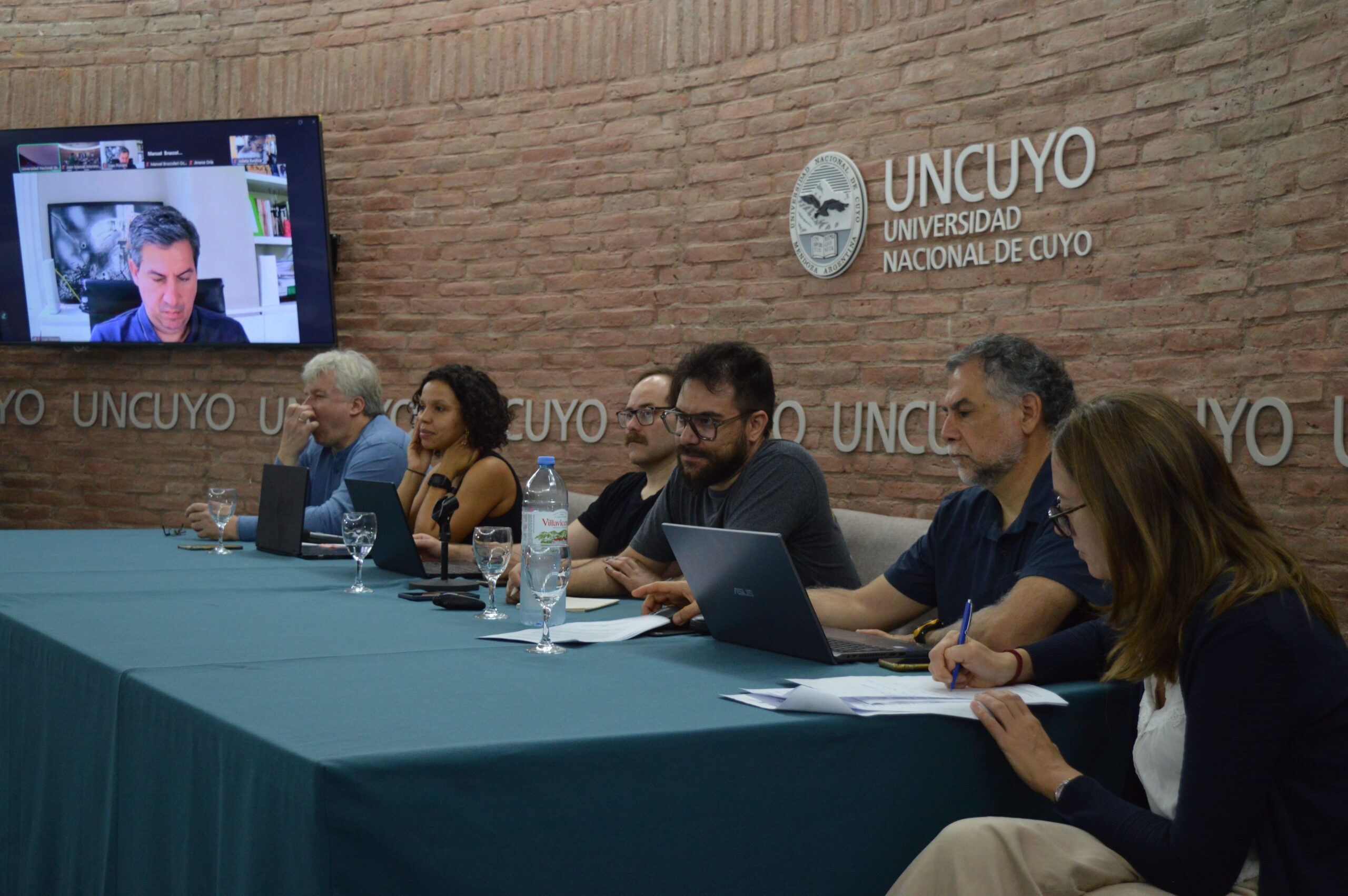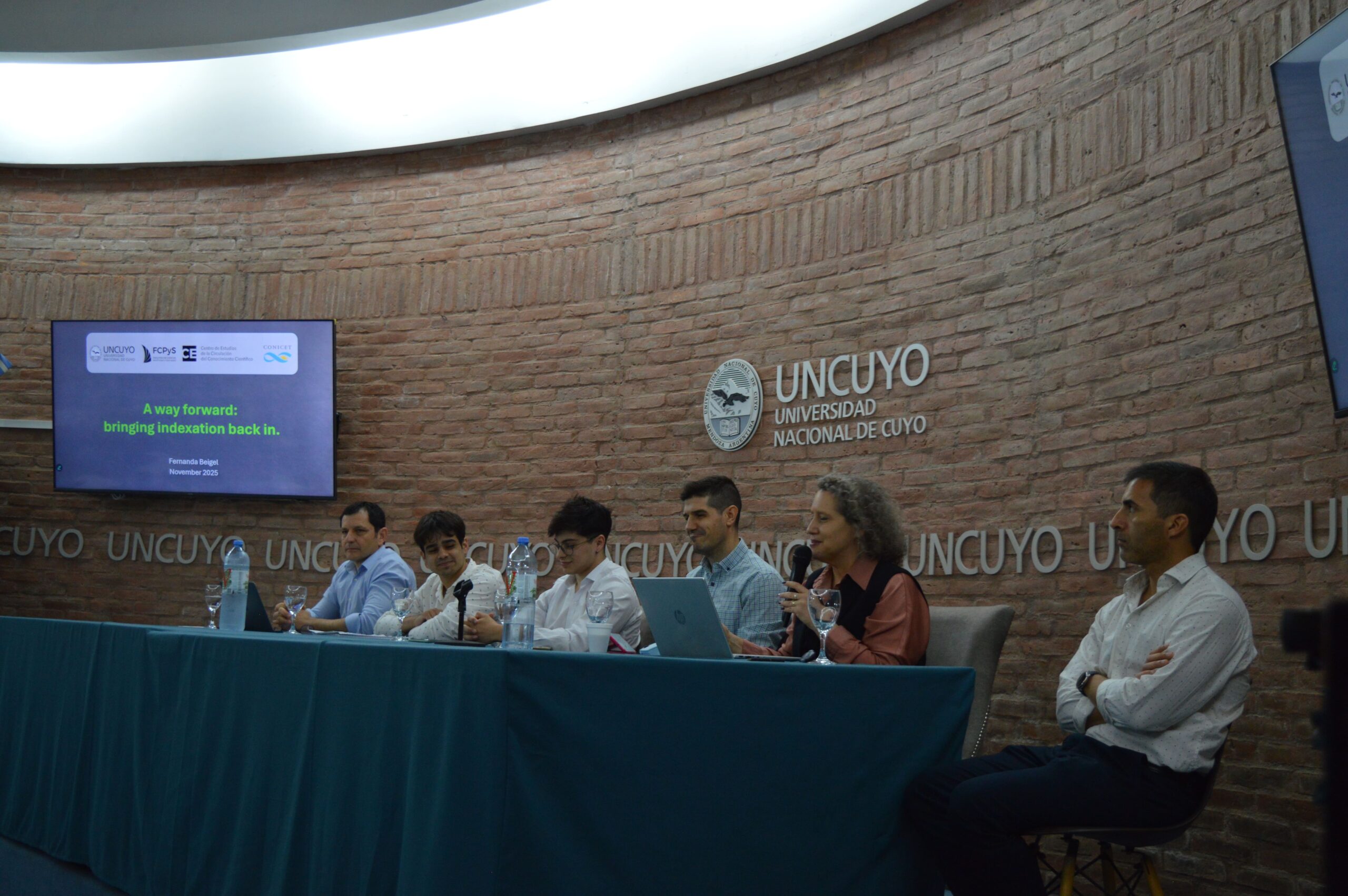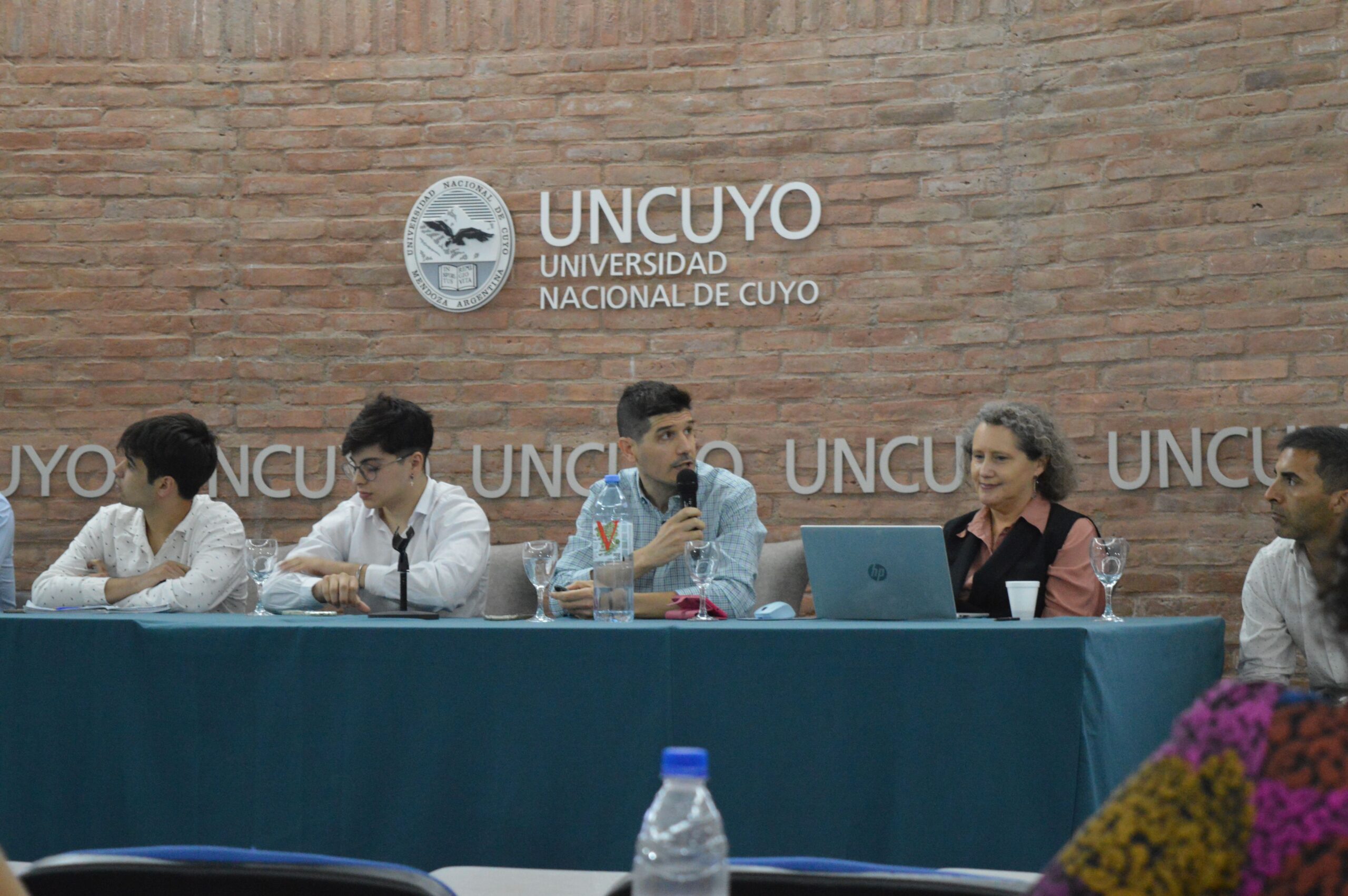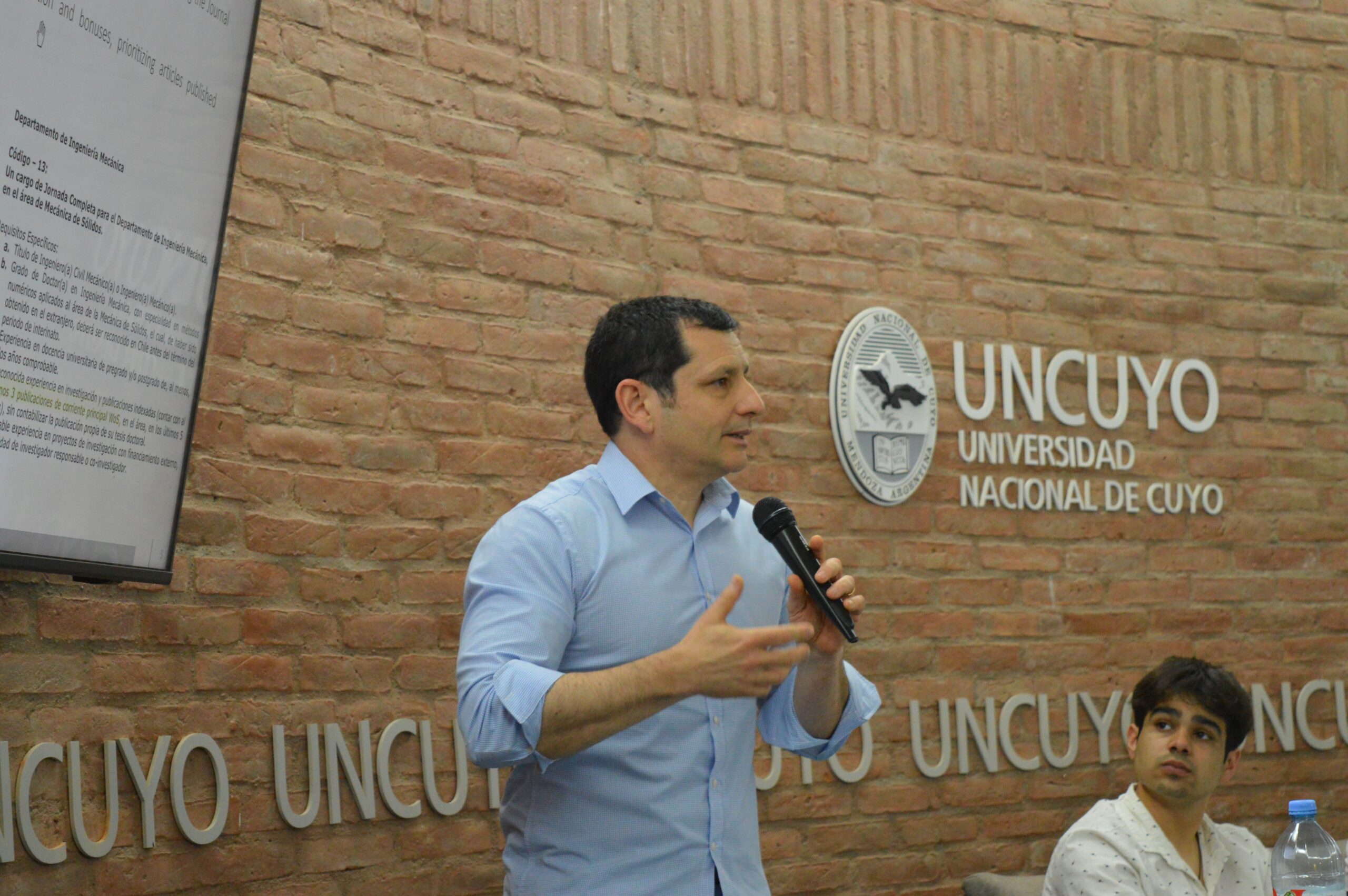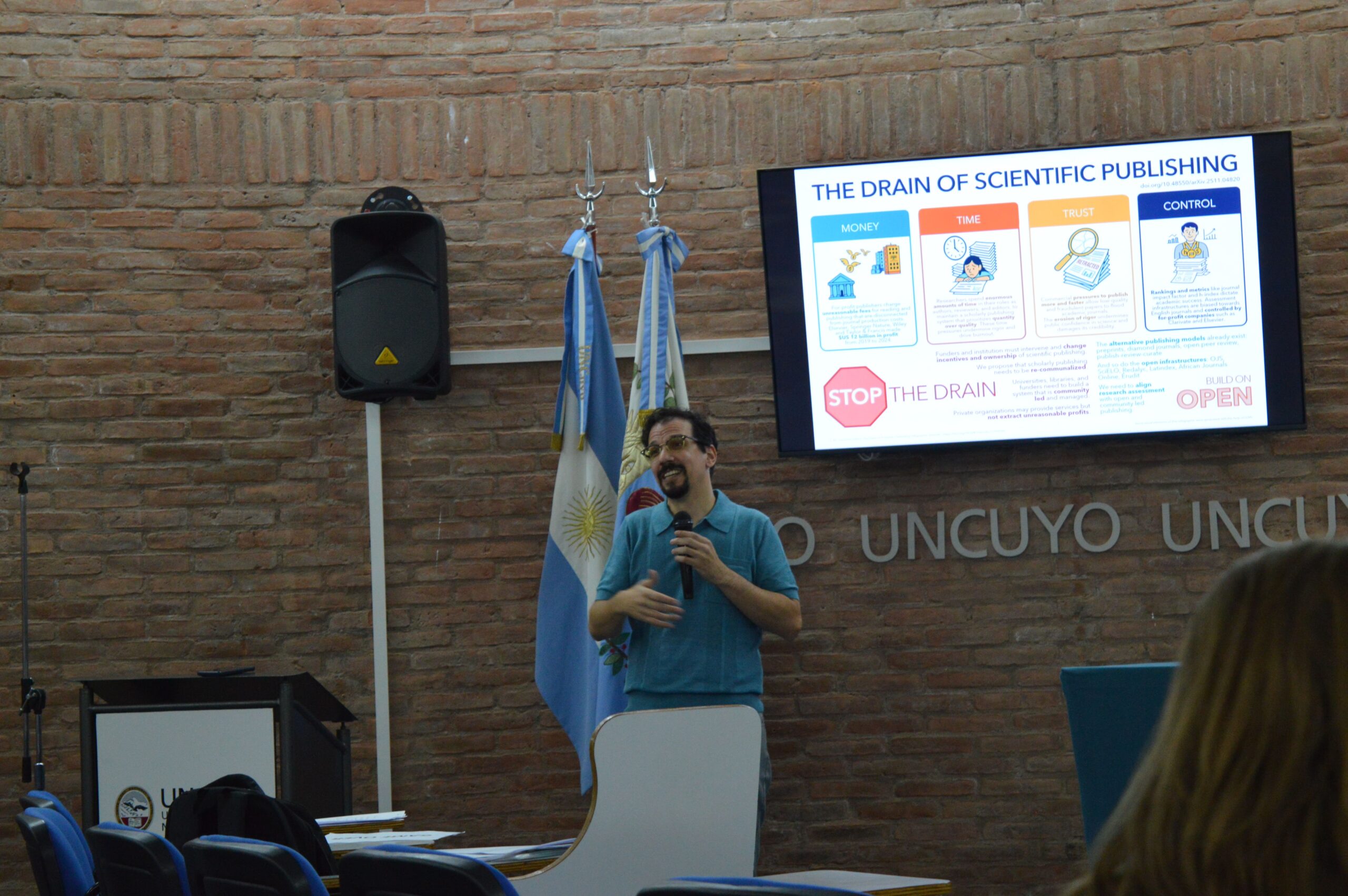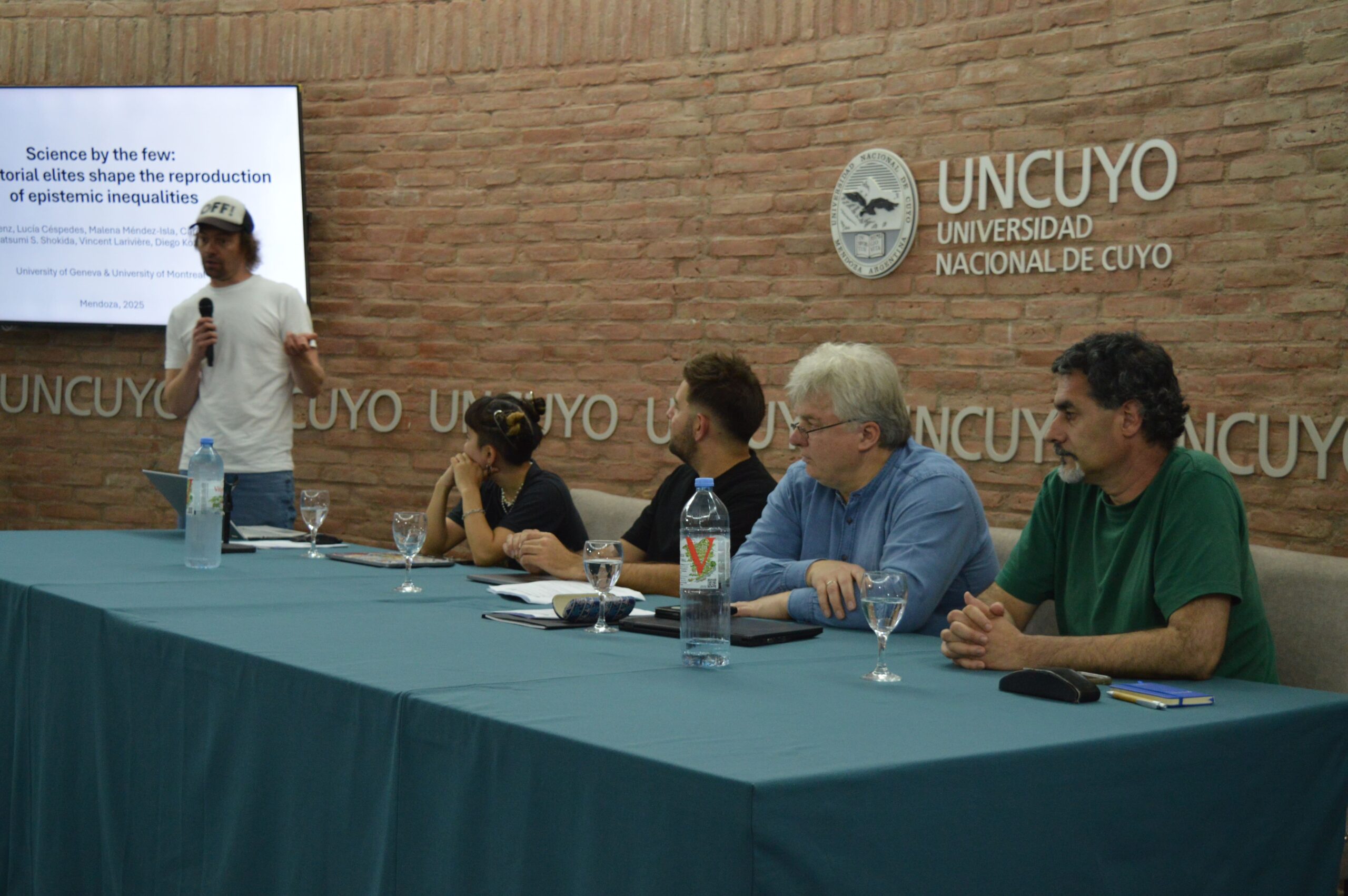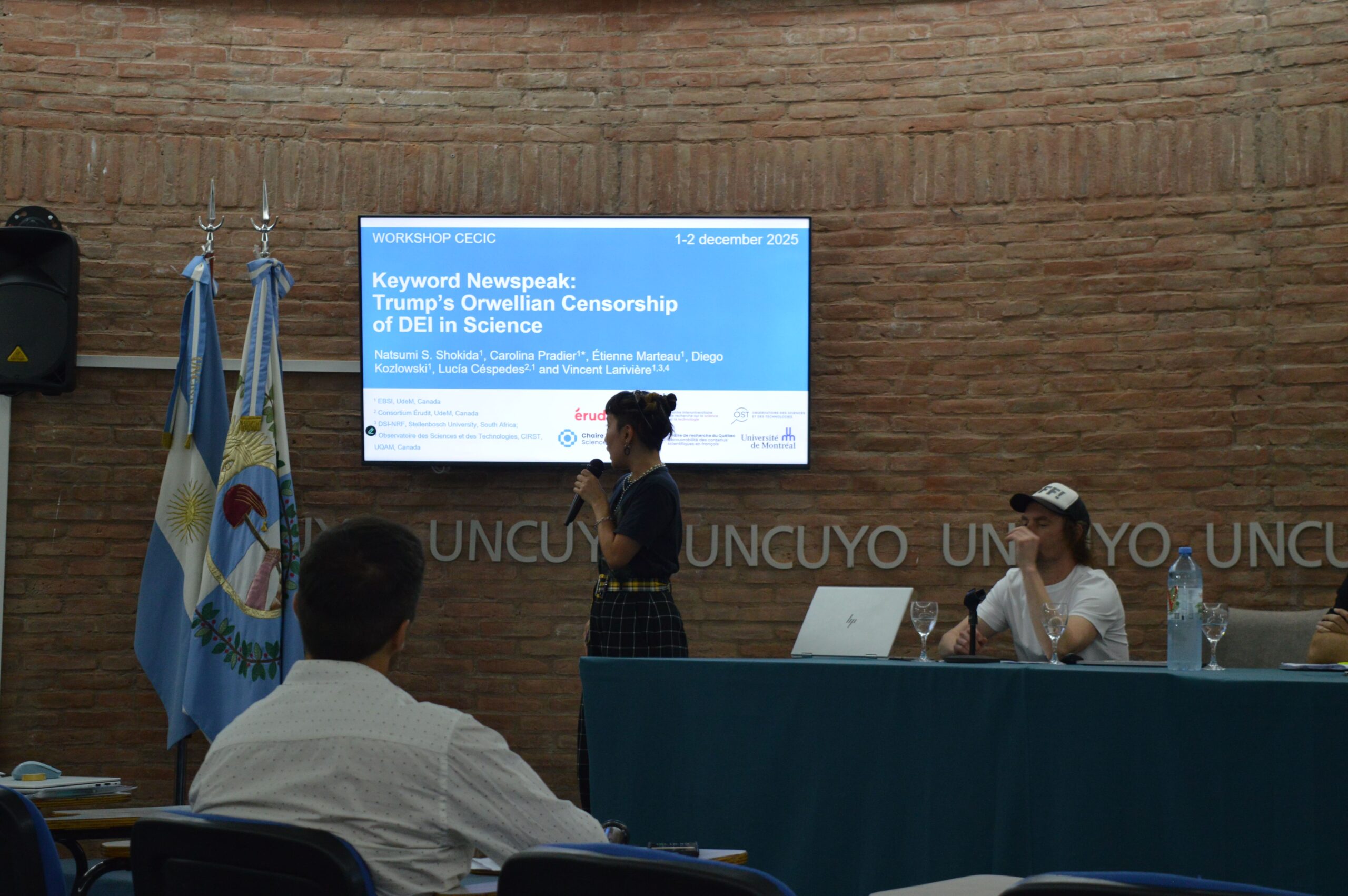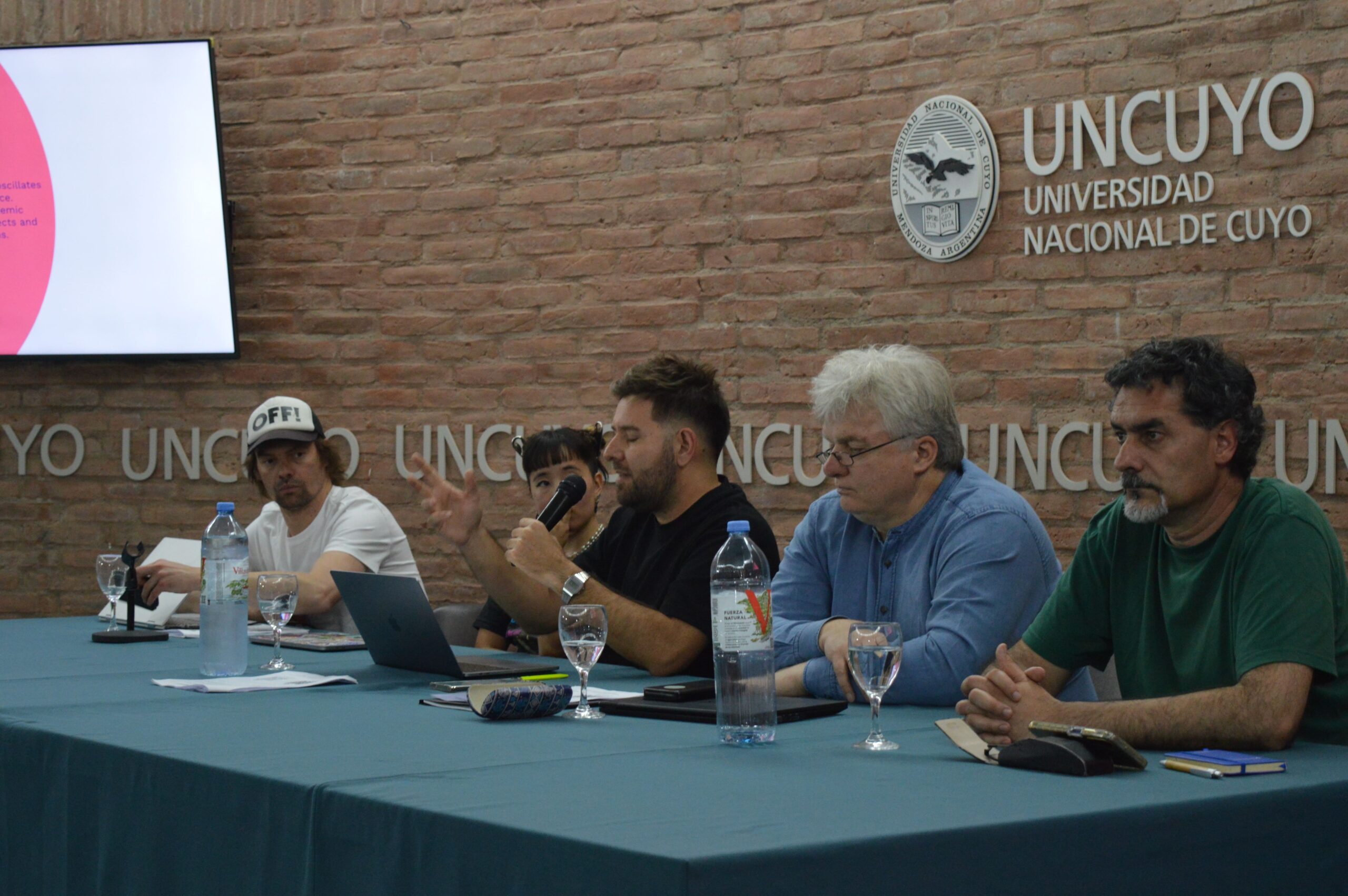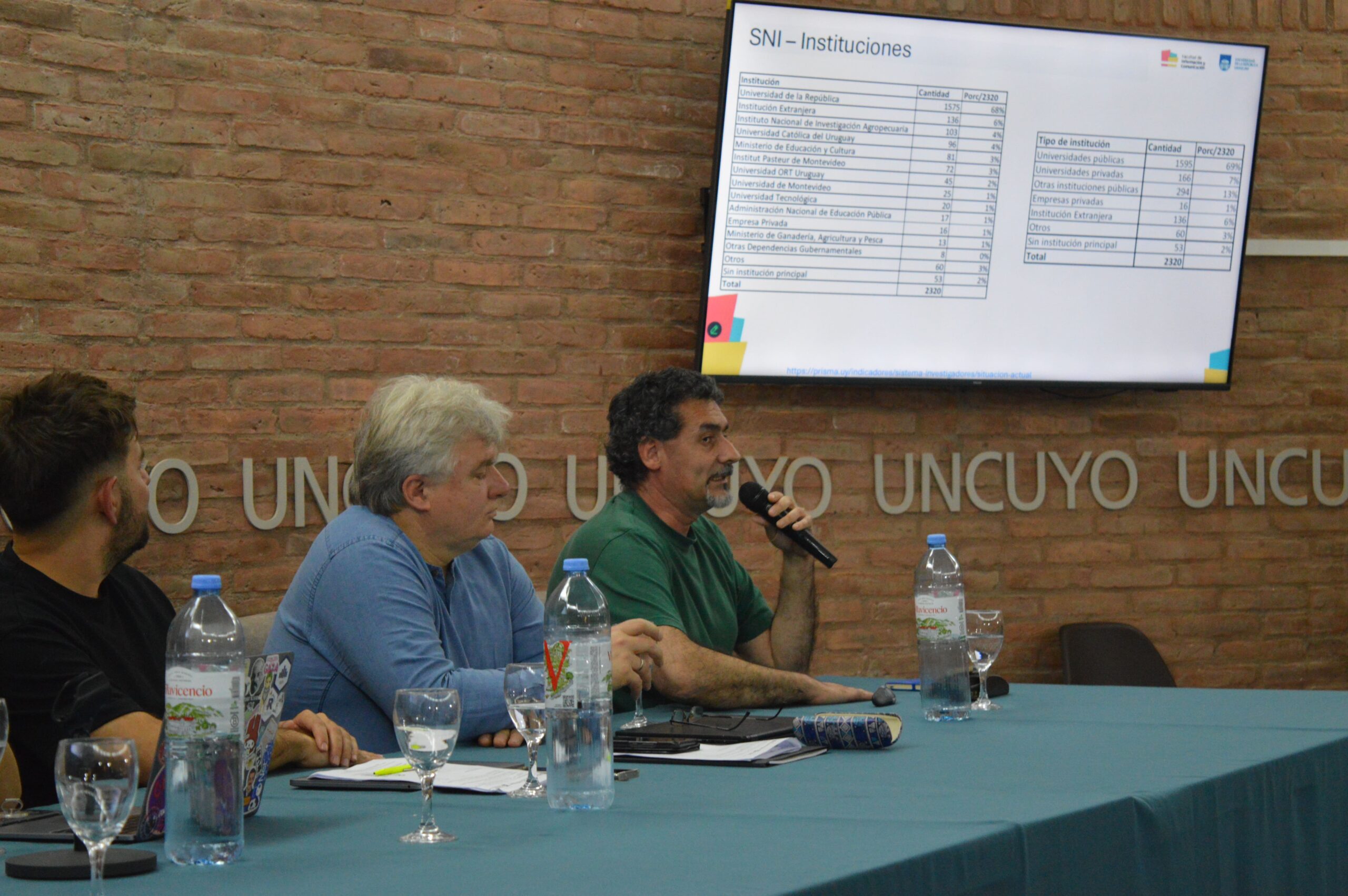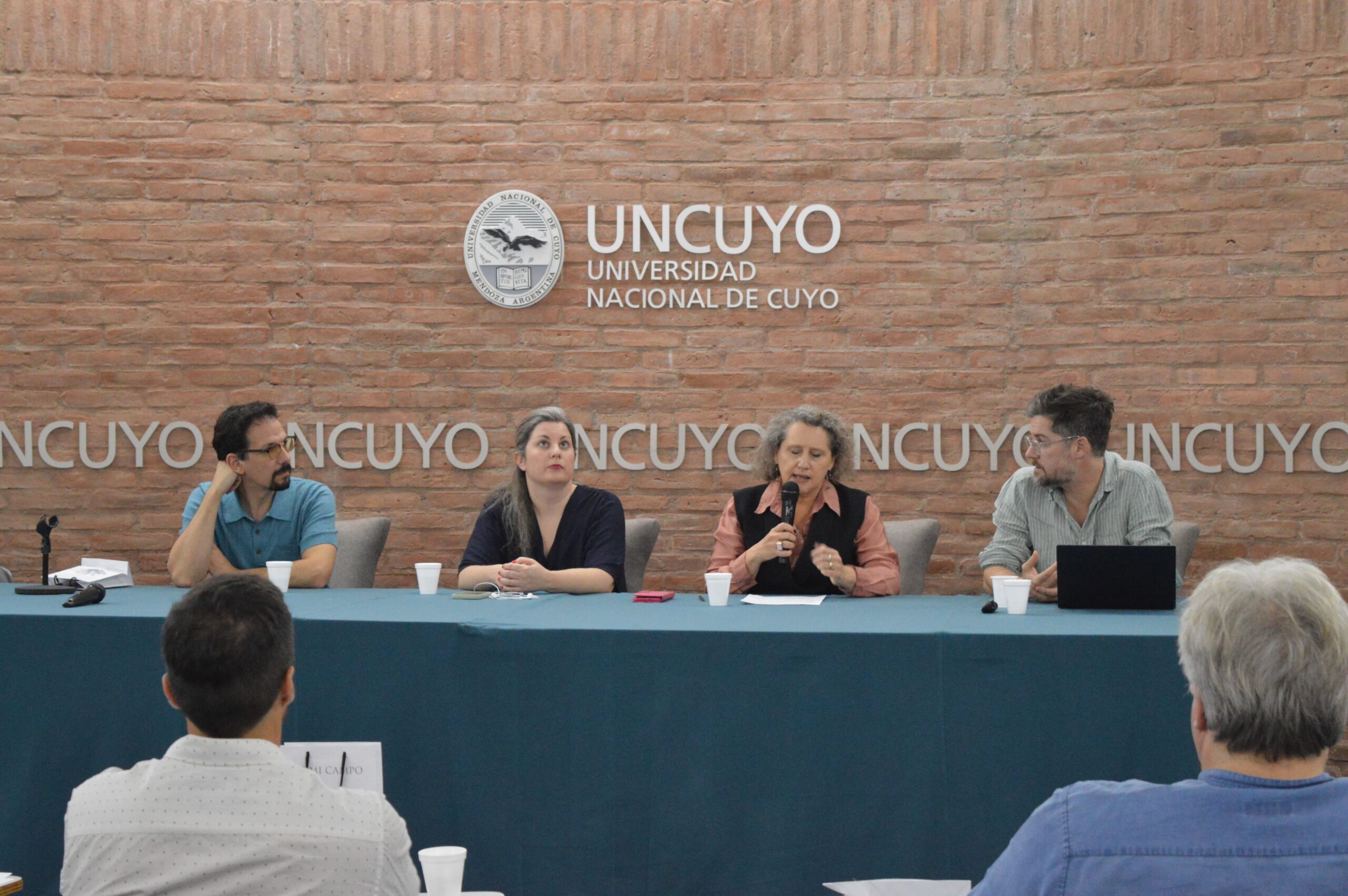
The Workshop CECIC 2025 is coming soon: “Reforms of the evaluation system and open science under scrutiny: global dilemmas and academic asymmetries.”

The event will take place on December 1 and 2 at the CICUNC Central Cylinder, National University of Cuyo, and will feature simultaneous English-Spanish translation.
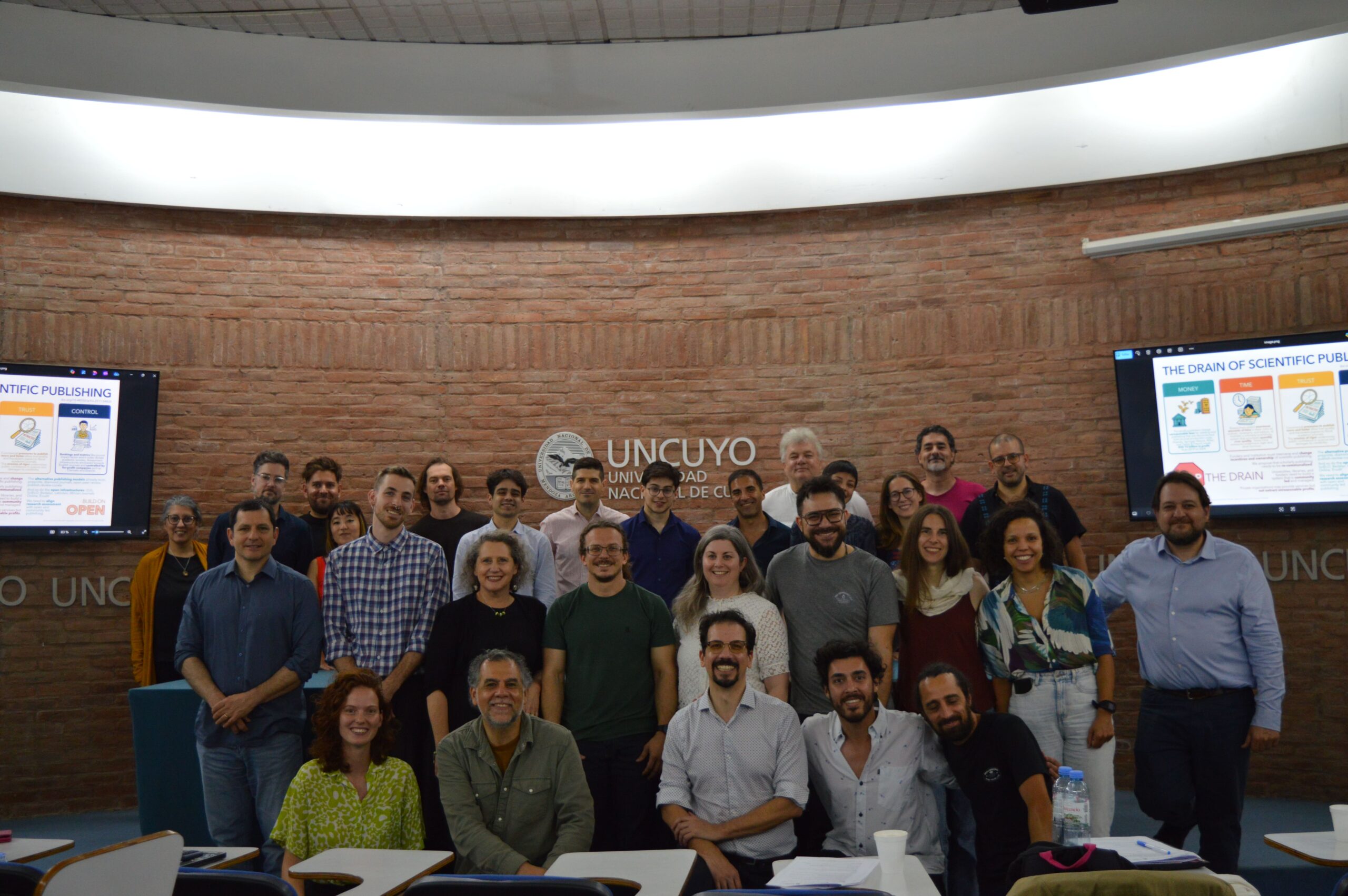
 

This workshop aims to reflect on various relevant and compelling topics in current international scientific discourse. To this end, six panels have been developed to address the dynamics of knowledge circulation, such as the drain of scientific publications on the publishing market; the future of global, regional, and national data sources; emerging and persistent asymmetries in science, such as gender and class; different perspectives on open data in the social sciences; the processes of selecting scientific journals by researchers; and the current dynamics of academic evaluation.

The scientific event will consist of two days of presentations, which will be simultaneously translated into English-Spanish. During the first day, the panels will focus on the asymmetries inherent in the scientific system, data sources from a multiscale perspective, and the drain of academic publishing on the international market. Stefanie Haustein (School of Information Studies, University of Ottawa, Canada & co-director, ScholCommLab), Vincent Larivière (CIRST, Université de Montréal, Canada), Fernanda Beigel (INCIHUSA-CONICET / CECIC, FCPYS-Universidad Nacional de Cuyo, Argentina), Juan Pablo Alperin (Simon Fraser University, Canada & co -director, ScholCommLab), Alysson Fernandes Mazoni (University of Campinas, Brazil), Lucía Céspedes (Érudit / Université de Montréal, Canada), Osvaldo Gallardo (CONICET / CECIC, Faculty of Political and Social Sciences, National University of Cuyo, Argentina), Carolina Pradier (Université de Montréal, Canada), Diego Kozlowski (Université de Montréal, Canada), Natsumi S. Shokida (Université de Montréal, Canada), Víctor Montoya (National University of Tres de Febrero, CECIC, Argentina), Denis Baranger (National University of Misiones, CECIC, Argentina), Marina Félix de Melo (Federal University of Alagoas, Brazil).

During the second session, the topics will focus on open data and its development from the social sciences, how researchers choose where to publish their research, and current academic evaluation processes. Participants will include Peter Birle (Ibero-Amerikanisches Institut, Germany), Carolina Santarossa (Ibero-Amerikanisches Institut, Germany), Clara Ruvituso (Ibero-Amerikanisches Institut, Germany), Fabio Erreguerena (CECIC, Faculty of Political and Social Sciences, National University of Cuyo, Argentina), Juan Piovani (CONICET, UNLPlata, Argentina), Osvaldo Gallardo (CONICET / CECIC, Faculty of Political and Social Sciences, National University of Cuyo, Argentina) & Gonzalo Castillo (CONICET, Faculty of Social Sciences, National University of San Juan, CECIC, Argentina), Exequiel Fontans (SNI Uruguay / University of the Republic, Uruguay), Fernanda Beigel (INCIHUSA-CONICET / CECIC, Faculty of Political and Social Sciences, National University of Cuyo, Argentina), Gonzalo Villarreal (PREBI-SEDICI National University of La Plata and CESGI Scientific Research Commission, Argentina), Enzo Rucci (III-LIDI, Faculty of Computer Science, National University of La Plata and Scientific Research Commission, Argentina), Lautaro Josin Saller (PREBI-SEDICI National University of La Plata, Argentina), Juan Cruz Mazullo (PREBI-SEDICI National University of La Plata, Argentina), Erwin Krauskopf (University of the Americas, Chile), Pierre Benz (University of Geneva, Switzerland / Université de Montréal, Canada), Natsumi S. Shokida (Université de Montréal, Canada), and Maximiliano Salatino (INCIHUSA-CONICET, CECIC-UNCuyo, Argentina).

Below are the links to access the registration form and the complete program.

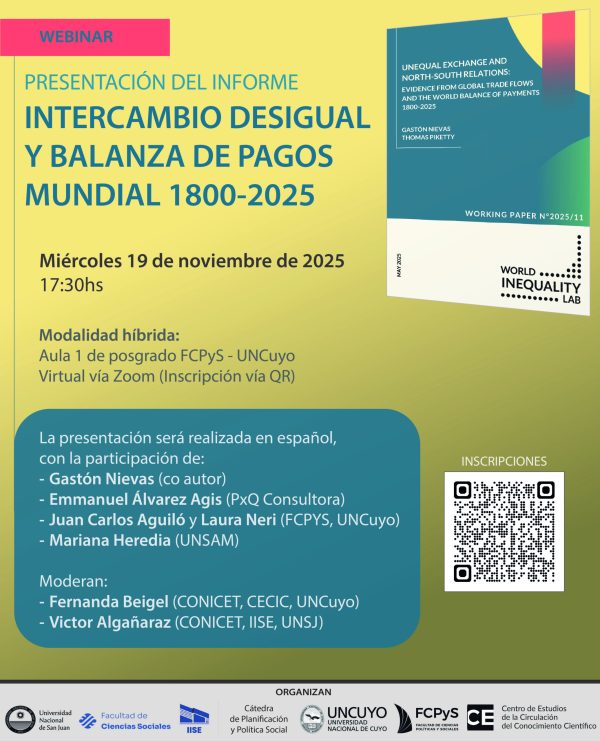
CECIC organizes a webinar to discuss the World Inequality Lab (Nievas-Piketty) report on unequal exchange 1800-2025

The event will be held in a hybrid format on November 19 at 5:30 p.m. It will feature Gastón Nievas, Emmanuel Álvarez Agis, Juan Carlos Aguiló, Laura Neri, and Mariana Heredia.

Portada - copia
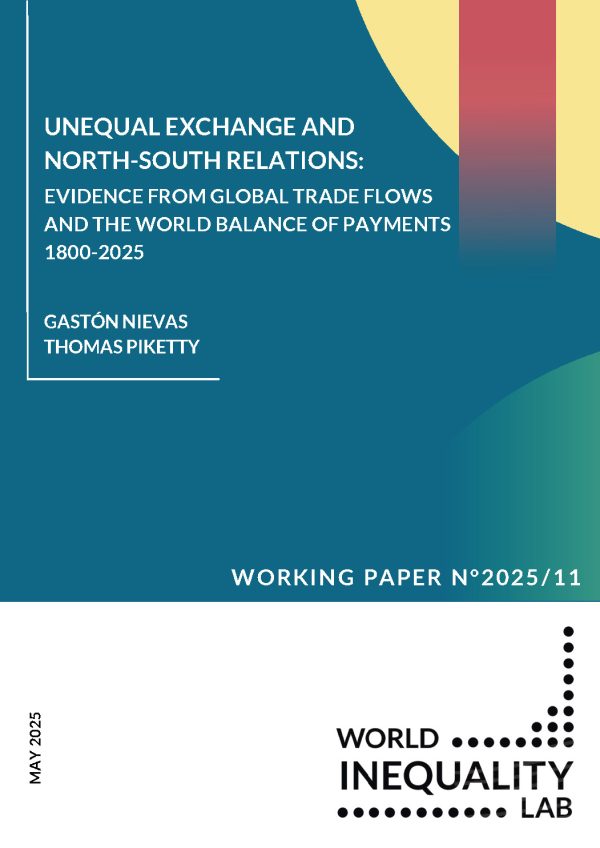
Cover of the World Inequality Lab (Nievas-Piketty) report on unequal exchange 1800-2025

During the webinar, the Nievas-Piketty report entitled “Unequal exchange and North-South relations: evidence from global trade flows and the world balance of payments 1800-2025” will be presented. The report analyzes global trade flows and the world balance of payments, covering 57 major territories (48 countries and 9 residual regions) during the period 1800-2025. The construction of this database made it possible to analyze patterns of global imbalances, current account surpluses and deficits, and the accumulation of net external wealth over more than two centuries.

The presentation and discussion will be in Spanish and will feature the participation of co-author Gastón Nievas, with comments from Emmanuel Álvarez Agis (PxQ Consultora); Juan Carlos Aguiló (FCPyS, UNCuyo), Laura Neri (FCPyS, UNCuyo); and Mariana Heredia (UNSAM). The seminar will be coordinated by Fernanda Beigel (CONICET, CECIC-UNCuyo) and Victor Algarañaz (CONICET, IICE-UNSJ).

Participants

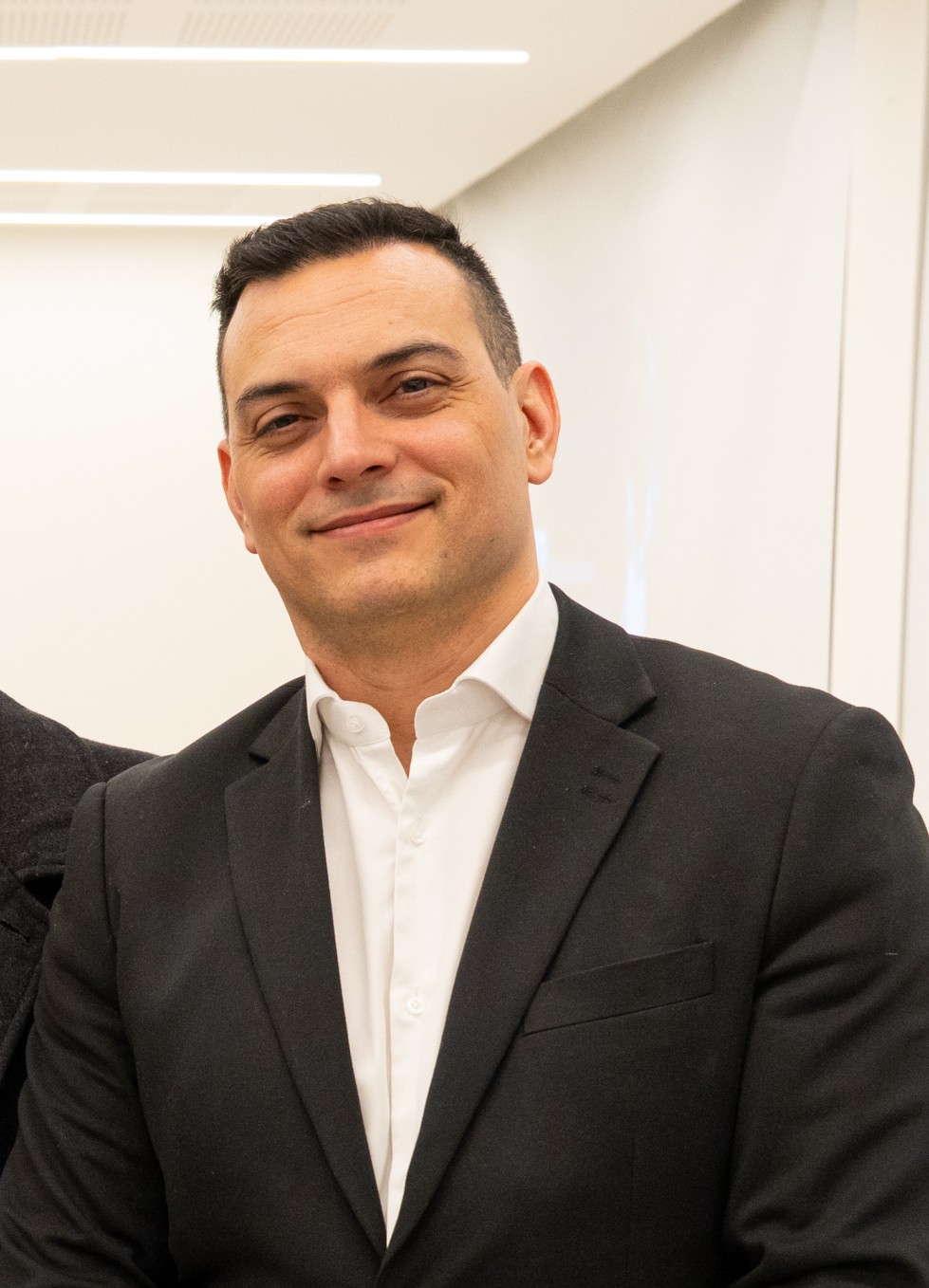
Gastón Nievas

National Accounts Coordinator at the World Inequality Lab (WIL). He is a PhD candidate at the Paris School of Economics (PSE) and studies how globalization shapes inequality, focusing on the persistent gaps between rich and poor countries, as well as the power relations that underpin them. His work lies at the intersection of geoeconomics and international macroeconomics.

Emmanuel Álvarez Agis

Emmanuel Álvarez Agis holds a bachelor's and master's degree in economics from the University of Buenos Aires (UBA). He also has a postgraduate degree in public opinion and political communication from FLACSO. He was Deputy Minister of Economy between 2013 and 2015 and Undersecretary of Macroeconomic Programming between 2011 and 2013. He has advised the UN and the World Bank on economic policy and has published academic articles on macroeconomic issues in several specialized journals. He directed the economics program at the National University of Juarez Chihuahua (UNAJ) between 2016 and 2019. He is currently a partner at PxQ Consultora, where he heads the Macroeconomics department.

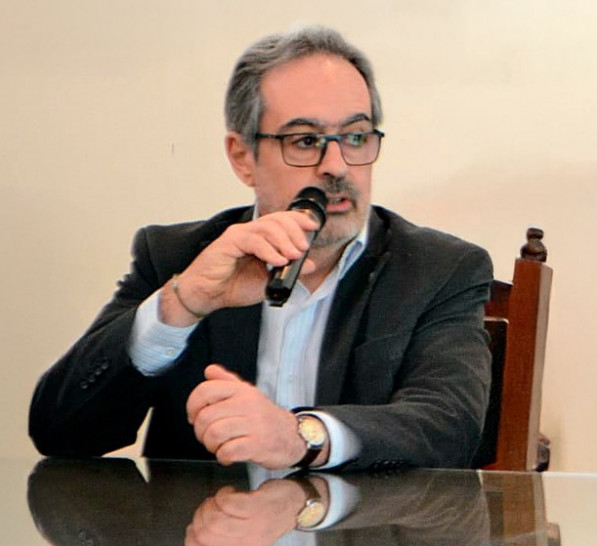
Juan Carlos Aguiló

Juan Carlos Aguiló holds a PhD in Social Sciences from UNCuyo, a Master's in Public Administration from Harvard University, and a Bachelor's in Sociology from UNCuyo. He works as a professor and researcher at UNCuyo: Full Professor of Social Policy, Faculty of Political and Social Sciences, UNCuyo; Postgraduate professor at national and international universities. He was Dean of the Faculty of Political and Social Sciences (2005-2011) and Coordinator of the Public Policy Area of the UNCuyo Rector's Office (2011-2014). He is Executive Coordinator of the Council of Deans of Social Sciences and Humanities Faculties (CODESOC); national and international consultant on government and public policy, public management, social development, social policy, and rural development. He is co-author of the book “Universal Child Allowance: Impact on Life Trajectories and Ideological Struggle,” published by the Floreal Gorini Cultural Cooperation Center, Buenos Aires, ISBN 978-3920-24-0, and of numerous articles on public and social policy.

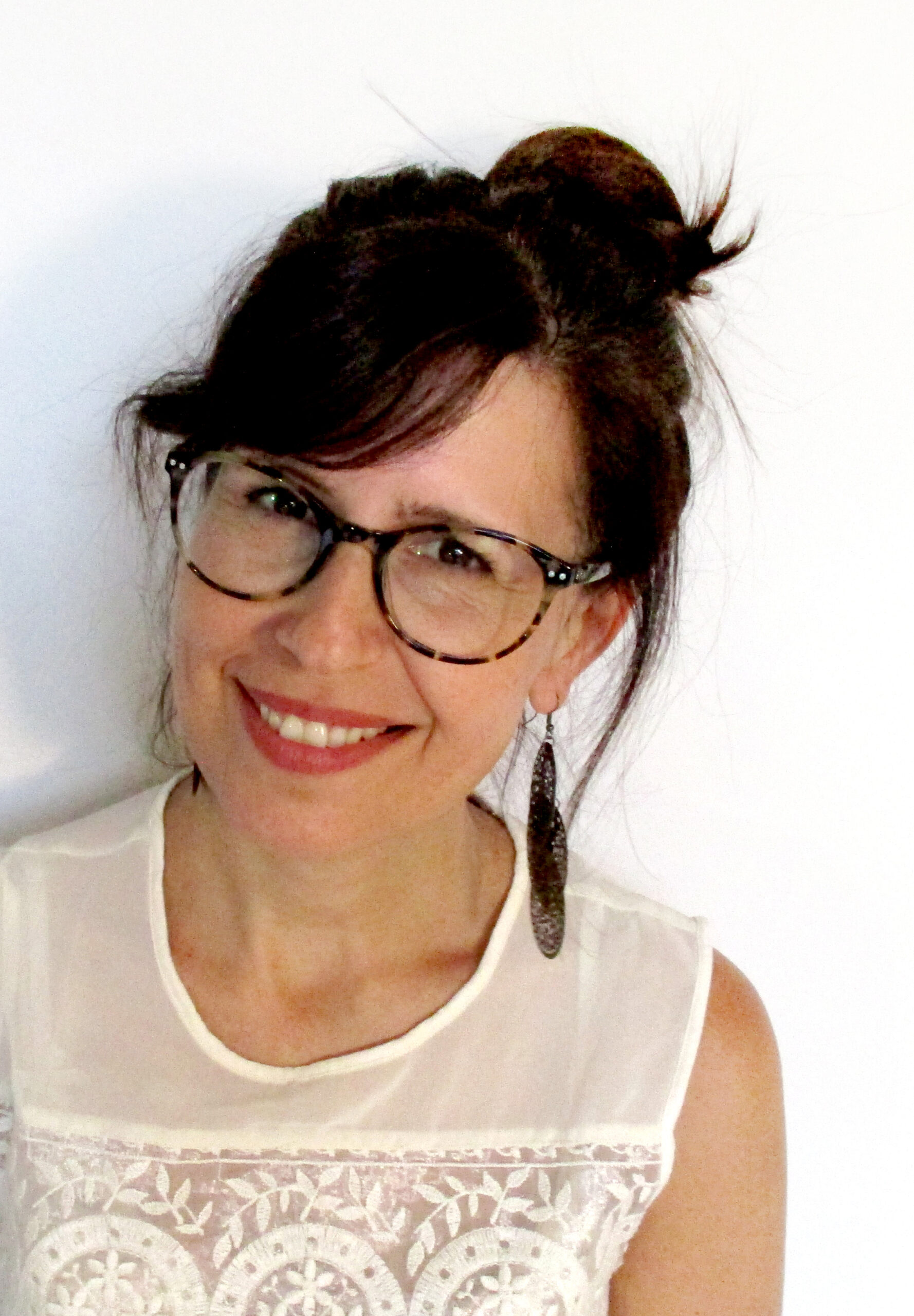
Laura Neri

Laura Neri holds a PhD in Social Sciences with a specialization in Political Science from UNCuyo, Mendoza. She also holds a Master's degree in Social Sciences with a specialization in Political Science from FLACSO Argentina and a Diploma in Advanced Studies from Pablo de Olavide University, Seville, Spain. She has a degree in Political Science from UNCuyo, Mendoza, Argentina. She currently works as a lecturer and researcher in Social Policy and Public Policy at UNCUyo, Mendoza. She has taught courses on Social Policy at universities in Argentina and abroad. Her research topics include Inequality and Social Policy, Welfare States, and Social Policy in Latin America.

Mariana Heredia

Mariana Heredia is a specialist in the sociology of elites and the historical sociology of recent Argentina. She is a researcher at CONICET at the Institute of Higher Social Studies, where she also teaches undergraduate and graduate courses. In addition, she is the director of the Master's program in Economic Sociology and a professor at the University of Buenos Aires and the University of San Andrés. She has published numerous articles in national and international journals, as well as the books A quoi sert un économiste (Paris, 2014), Cuando los economistas alcanzaron el poder (Buenos Aires, 2015), and ¿El 99% contra el 1%? (Buenos Aires, 2022). She holds a PhD in Sociology from the Ecole des Hautes Etudes en Sciences Sociales.

FLYER FINAL
The event flyer