

CECIC Member to Give a Presentation at Humboldt University of Berlin

Next Wednesday, January 28, at 6 a.m. Argentina time, Osvaldo Gallardo will present “A quantitative and qualitative approach to the political economy of scientific publications in a challenging context. Argentine researchers and article processing charges (APCs): bibliometrics, representations, and practices.” The event will be held in person at Humboldt University in Berlin, with transmission via Zoom.
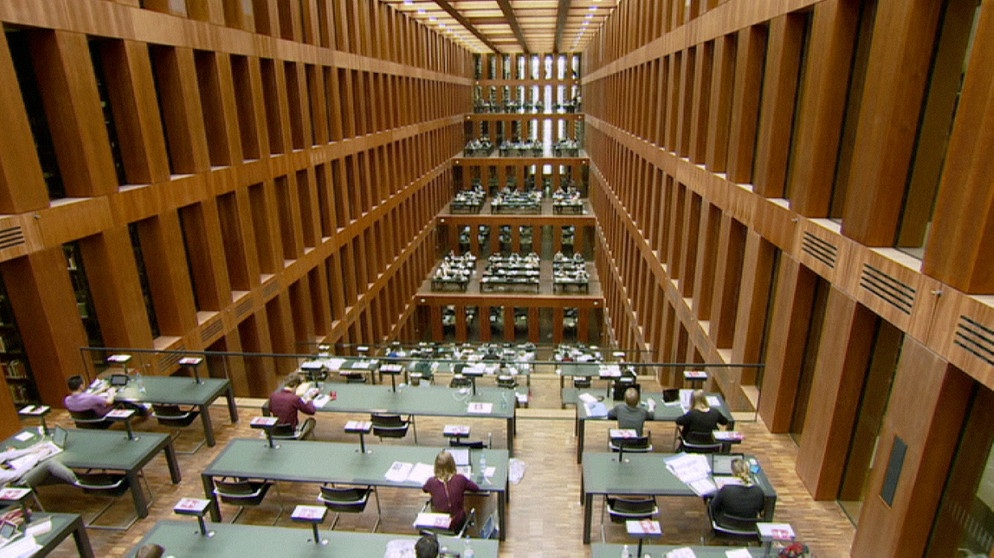
Campus of Humboldt University of Berlin

Globally, concerns are rising about the profit-driven scientific publishing model, which, under the guise of (commercial) Open Access, continually increases the Article Processing Charges (APCs) required to publish in an ever-growing number of scientific journals. In Argentina, the scientific community faces intense pressure from ongoing government attacks and substantial budget cuts. In this challenging context, how are researchers’ practices and perceptions evolving?

In the first part of this presentation, I share the results of a research project examining the impact and practices of researchers in peripheral countries who regularly face the challenge of paying APCs. Based on a survey conducted between 2023 and 2024 in Argentina, South Africa, Mexico, and Brazil, I briefly highlight the differences across countries, disciplines, and between junior and senior researchers.

In the second part, I present preliminary results from a more focused analysis. From a Bourdieu-inspired perspective, the distinctive aspects of the Argentine case offer a rich opportunity to reflect on how local and global conditions influence the position and disposition of researchers under political and academic pressures. To do this, I examine three analytical dimensions: 1) whether Argentine-based researchers’ publication practices have changed (or not) in recent years, using open bibliometric sources; 2) the waivers policy of the main profit-oriented publishing companies for these authors; and 3) the researchers’ perspective on the APC-based publishing model in 2023, on the eve of the far-right government’s start, and the evolving (or unchanged) practices and viewpoints after two years of threats and budget cuts.

Link de Zoom

https://hu-berlin.zoom-x.de/j/66137712462?pwd=bTF4VG9Ca1BxMkFqOE9xTFZxYldWQT09
Meeting-ID: 661 3771 2462

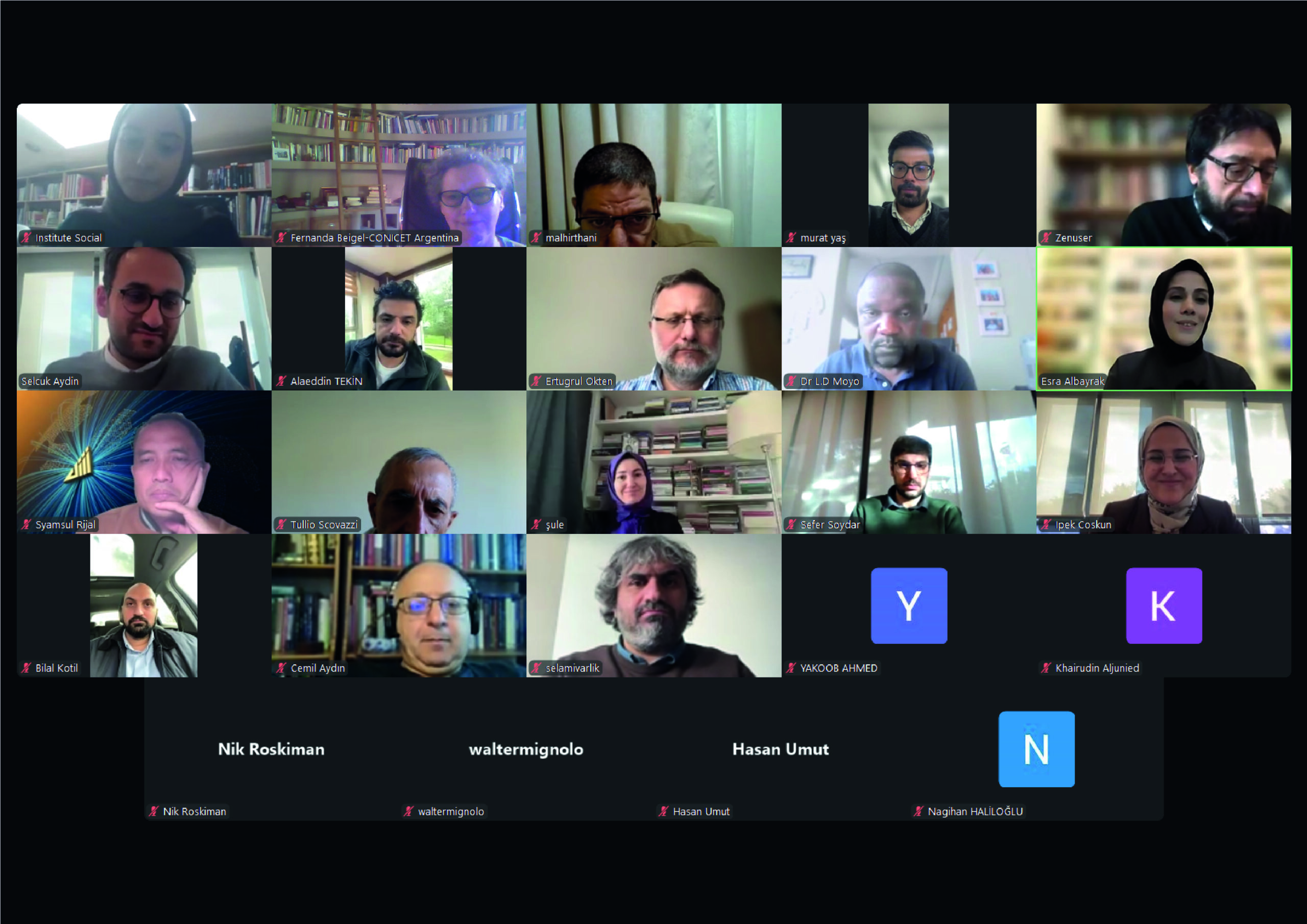
CECIC participates in the organization of the Forum on Decolonization in Istanbul

In a world where global asymmetries and epistemic injustice have become unmistakably visible, critical reflection on knowledge hierarchies has become increasingly urgent. The Decolonization Forum 2026: Decolonizing Knowledge Production and Circulation aims to bring together scholars, researchers, and intellectuals from around the world to critically examine dominant paradigms, share alternative frameworks rooted in local and indigenous knowledge, and envision decolonial futures across disciplines.

Decolonization Forum_1-1
previous arrow
next arrow

Flyer for the event and meeting of the forum’s academic committee on December 30, 2025.

The event has the academic endorsement of the Board of Directors of the Faculty of Political and Social Sciences. The two-day forum will feature a keynote speech, plenary sessions, and parallel sessions along with an interactive “Decolonization Talks” series. By combining plenary and thematic formats, the programme seeks to foster both in-depth scholarly debate and cross-disciplinary exchange.


The plenary sessions at the forum will address four interrelated thematic areas:

  • The Problem of Knowledge Production: Decolonizing Methodologies Knowledge Production and Circulation in Higher Education
  • Decolonizing Media: Disrupting Hegemonic Narratives
  • From Epistemic Dependency to Economic Sovereignty: Rethinking Development Models

Alongside these plenary sessions, the forum will host six parallel academic sessions. Scholars are invited to submit abstracts for these sessions on a broader range of related topics.


Critical Themes


We encourage a broad range of theoretical, empirical, and methodological contributions that address, but are not limited to, the following themes:

  • Colonial Histories of Knowledge Circulation
  • Epistemic Injustice and Knowledge Inequalities
  • Alternative Genealogies of Knowledge
  • Mobility of Knowledge Across Borders
  • Decolonizing the Disciplines: Social Sciences, Humanities and Beyond
  • Methodologies for Decolonized Knowledge Production
  • Decolonizing Research Agenda and Ecosystem
  • Knowledge and Power in the Digital Age
  • Knowledge Circulation for Decolonization